
There is a popular belief that cutting down or reducing carbohydrates (carbs) from your diet can help you lose weight. Blame it on social media or viral claims, this notion has been doing the rounds since quite some time. But as all know, carbs are an important food group. They are the body's main source of fuel, supplying essential energy for physical activity and daily bodily functions. Therefore, cutting them down entirely is definitely not an option. You can reduce carbs from your diet, but this too needs to be done the right way. To understand how to reduce or cut down on carbs without harming your body, read ahead.
Let us take a look at what our experts, Ms Chitra BK, Chief of Dietetics, KIMS Hospitals, Electronic City, Bengaluru, has to say about this.
How to Cut Carbs the Right Way From Weight Loss Diet
Let us dive right in and address the main question: if you are planning to reduce your carb intake to lose weight, how can you do it the right way?
Shedding light on this, Ms Chitra says, “It is not right to eliminate the entire carbohydrates for weight reduction. Carbohydrates are vital energy providers, while plenty of foods with carbohydrates also have fibres, vitamins and minerals.”
The expert further explains, “It is better to limit eating refined carbohydrates such as sugar drinks, sweets, pastries, etc; instead, eat whole grains, millets, pulses, vegetables and fresh fruits in their right amount. Eating carbohydrates with protein, fibres and healthy fats provides better satiety and allows one to control the amount of food consumed. Long-lasting weight loss results from balanced eating habits rather than avoiding any food category."
 cutting carbs 1
What Are Carbohydrates?
Carbohydrates, also known as carbs, are sugar molecules. They are one of three main nutrients found in foods. Other nutrients include proteins and fats. Our body breaks down carbohydrates into glucose throughout the day. Glucose is converted into energy for our body cells, tissues, organs and muscles.
Carbs like starches and sugars can raise our glucose (blood sugar) levels. Frequent blood sugar spikes can raise our risk of heart attack, diabetes and stroke.
These are three main types of carbohydrates:
- Sugars: They are also called simple carbs because they are found in the most basic form; like the sugar that is found naturally in fruits, vegetables, and milk.
- Starches: They are complex carbs. Our body needs to break starches down into sugars to use them for energy. Starches include bread, cereal, pasta and potatoes.
- Fibre: It is also a complex carb. Our body cannot break down most fibres. Fiber-rich foods include fruits, vegetables, nuts, seeds, beans, and whole grains.
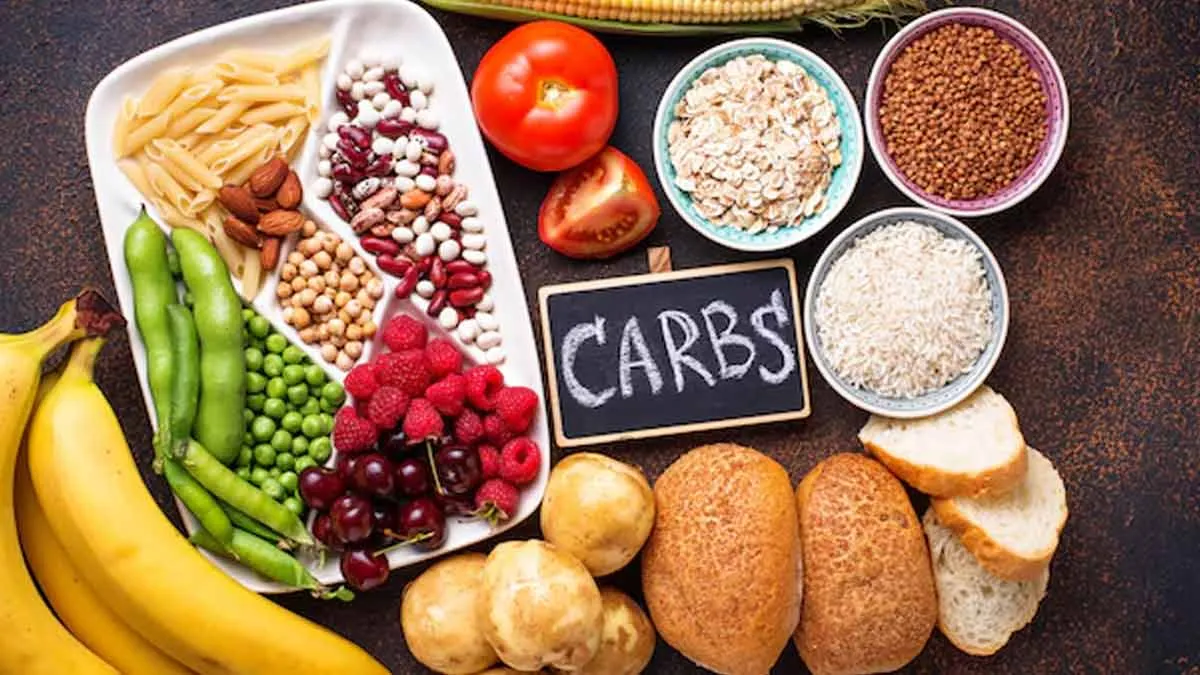 cutting carbs 2
Which Foods Have Carbohydrates?
Carbohydrates are necessary for a healthy and balanced diet, but too much of it could be harmful. On this note, let’s take a look at some of the common foods with carbohydrates:
- Grains, including bread, noodles, pasta, crackers, cereals, and rice.
- Fruits, such as apples, bananas, berries, mangoes, melons, and oranges.
- Dairy products like milk and yogurt.
- Legumes, such as dried beans, lentils, and peas.
- Sweets, such as cakes, cookies, candy, and other desserts.
- Juices, regular sodas, fruit drinks, and energy drinks that contain sugar.
- Starchy vegetables, like potatoes, corn, and peas.
Why Carb-Heavy Indian Diet May Be a Cause of Concern
The Indian Council of Medical Research-Indian Diabetes (ICMR-INDIAB) study is a cross-sectional survey that was conducted in collaboration with the Madras Diabetes Research Foundation (MDRF). It was conducted on 1,21,077 adults from urban and rural areas across 36 States and Union Territories. The findings were published in 2025 at the Nature Medicine journal.
The study discovered that the average Indian diet is highly imbalanced, with a staggering 62% of its calories derived from carbohydrates – that too often from refined sources like white rice, milled flours and added sugar. Moreover, India’s protein intake has been found to be suboptimal at just 12% of daily calories, and saturated fat intake exceeded recommended thresholds in all but four states.
The researchers discovered a strong link between high carbohydrate intake from refined sources to an increase in metabolic risks. The analysis further stated that substituting just 5% of daily calories from carbs with plant or dairy proteins could significantly lower the risk of diabetes and prediabetes.
 cutting carbs 3
Tips To Make Carbs Part of Your Balanced Diet
According to the Association of UK Dietitians, here’s how you can make carbs a part of your balanced diet:
- Focus on complex carbohydrates: Choose wholegrain cereals and grains (such as wholemeal, barley, rye, brown rice, quinoa, oats etc). They are good sources of fibre, vitamins (specifically B vitamins).
- Eat starchy carbs in their natural form: If you are adding starchy carbohydrates as part of your meal, prepare and enjoy them in their natural form. For instance, eat potatoes and sweet potatoes with their skins.
- Manage portion sizes: Generally, it is believed that an appropriate meal-time portion for carbohydrate-containing foods is the size of your fist. This portion can then be altered, as per your activity levels.
- Be aware of free sugars in carbs: Reduce the intake of foods which have added sugars in them such as sweets, sugary drinks, cakes, cookies, and processed snacks. Carefully read food labels to spot added sugars such as sucrose and high-fructose corn syrup.
- Increase your fibre intake to balance carbs: Increase your fibre intake in diet such as vegetables, beans, peas, or lentils to your soups or salads. Try to add foods that provide 6g or more fibre per 100g. You can add beans, peas and lentils to your diet as they are not only good sources of fibre, but also low in saturated fat and high in folate, potassium, iron and magnesium.
ALSO READ- Scrolling While Eating? A Dietitian Explains If Screen Time Harms Your Gut
Conclusion
Achieving lasting weight loss does not mean you need to completely eliminate carbohydrates from your daily meals. Rather, cutting out this essential energy source is not a healthy option. It is, instead, advisable to focus on replacing refined sugars and milled flours with fibre-rich whole grains, vegetables, and legumes. You can also pair complex carbohydrates with adequate protein and healthy fats. This can help you stabilise your blood sugar, manage portion sizes naturally, and build a sustainable path to better metabolic health.
FAQ
Can you lose weight by only cutting carbs?
Yes, you can lose weight by cutting carbs, but the initial rapid drop is mostly water weight rather than actual fat.How many carbs should you eat per day?
Adults should generally eat 225 to 325 grams of carbohydrates per day, which makes up 45% to 65% of a standard 2,000-calorie diet.
All possible measures have been taken to ensure accuracy, reliability, timeliness and authenticity of the information; however Onlymyhealth.com does not take any liability for the same. Using any information provided by the website is solely at the viewers’ discretion. In case of any medical exigencies/ persistent health issues, we advise you to seek a qualified medical practitioner before putting to use any advice/tips given by our team or any third party in form of answers/comments on the above mentioned website.
How we keep this article up to date:
We work with experts and keep a close eye on the latest in health and wellness. Whenever there is a new research or helpful information, we update our articles with accurate and useful advice.
-
Current Version
Oct 01, 2026 19:09 IST
Published By : Shruti Das
Reviewed By : Ms Chitra B K