
One of the common worries when couples are attempting to conceive is whether daily sex will deplete sperm or lower male fertility. Unfortunately, no, for most healthy men. The body will continue to produce sperm, so daily sex won't cause the sperm to run out.
But if a man has sex daily, the amount of semen and the number of sperm in one ejaculation will decrease due to the decreased time for semen to build up. This doesn't necessarily mean the population is less fertile. In fact, some studies indicate that decreasing the interval between the two erections may help certain parameters of sperm quality to improve.
Does Everyday Sex Reduce Sperm Count?
Dr Vijay Dahiphale, Sexologist, Medicover Hospital, Navi Mumbai, explains, “Not to a level that causes infertility for most healthy men. The body continuously produces sperm, so daily ejaculation doesn't deplete the overall supply the way people often assume. What it can do is slightly lower the volume and concentration of sperm in each individual ejaculation, but this is different from actually reducing fertility.”

Sperm production is continuous. So, having sex or ejaculating daily does not mean the body suddenly runs out of sperm.
What can change is what comes out in each ejaculation:
- Semen volume may be lower.
- Sperm concentration may be lower.
- Total sperm count in that particular sample may fall.
- Sperm motility does not necessarily fall with frequent ejaculation.
- This distinction between sperm count in one sample and overall fertility is important.
ALSO READ- How Your Morning Brew Impacts Sperm and Egg Health: An Expert Guide
How Does Ejaculation Frequency Affect Sperm Quality?
Dr Dahiphale says, “Sperm production is a continuous process, happening in cycles that take roughly two to three months from start to finish, so the body is always replenishing its supply regardless of ejaculation frequency.”
- The development of sperm is a lengthy process. Modern research suggests human spermatogenesis takes around 74 days, followed by further maturation.
- This means today's ejaculation is not simply using up a fixed batch of sperm that will take a few days to replace.
- There is also an interesting difference between sperm quantity and sperm quality.

A 2022 Reprod Fertil. Study from PubMed compared semen samples analysed in 65 men after 1 day and 4 days of abstinence. The researchers determined that four days of abstinence would result in larger volume and sperm concentration in the semen. However, after 1 day, there was an improvement in the motility of sperm and a few sperm functions, such as nuclear DNA integrity.
The researchers concluded that longer sperm storage may make sperm more susceptible to oxidative damage. This suggests that more sperm in a sample does not automatically mean better-quality sperm.
Can Daily Sex Actually Be Helpful For Sperm?
Dr Dahiphale explains, “With very frequent ejaculation, each individual sample may contain a slightly lower sperm count and volume, since less time has passed for sperm to accumulate. However, frequent ejaculation also means fresher sperm is being released more often, which some research links to better motility and lower DNA fragmentation compared to sperm that's been stored for longer periods.”
A Transl Androl Urol. study looked specifically at daily ejaculation. Twenty healthy men ejaculated daily for 14 days. The researchers found that semen volume, sperm concentration and total motile sperm count decreased, particularly early in the study, but then reached a plateau. Importantly, sperm motility and DNA integrity did not show clinically meaningful deterioration.
The study was small, so its findings cannot be applied to every man. Still, it challenges the idea that daily sex automatically damages sperm quality.
How Often Should Couples Have Sex When Trying To Conceive?
Dr Dahiphale says, “Most fertility guidelines suggest intercourse every one to two days around the fertile window gives the best balance between adequate sperm count and sperm freshness.”
The American Society for Reproductive Medicine (ASRM) defines the fertile window as the six-day period ending on the day of ovulation. Its 2022 guidance says intercourse every one to two days during this period gives the highest pregnancy rates.
However, couples do not need to avoid sex on the days in between.
ASRM specifically states that intercourse more frequently than every one to two days is not associated with lower fecundity. Daily sex is therefore not considered harmful for conception in couples without an underlying fertility problem.
Does Daily Sex Reduce The Chance Of Pregnancy?
Dr Dahiphale says, “Not necessarily. Some studies suggest daily ejaculation during the fertile window can still support conception effectively, particularly because sperm quality, including lower DNA fragmentation, may actually be better with more frequent release.”
A study in Arch Gynecol Obstet. involving 120 couples undergoing IUI compared one day and three days of ejaculatory abstinence. The overall rates of pregnancy were comparable for both groups, 17.3% and 18.5%, respectively. There was also no significant difference in the levels of sperm DNA fragmentation.
This reinforces the overall argument that having slightly less sperm in one ejaculation doesn't mean that the chance of pregnancy is less.
What Matters More Than How Often You Have Sex?
Dr Dahiphale says, “Sperm quality is affected far more by lifestyle factors than by ejaculation frequency, including smoking, alcohol use, excessive heat exposure to the testicles, and poor sleep.”
Other factors can also affect sperm health, including:
- Smoking and tobacco use
- Heavy alcohol consumption
- Poor sleep
- Obesity and an unhealthy lifestyle
- Some medicines and recreational drugs
- Varicocele
- Hormonal problems
- Excessive heat exposure
Dr Dahiphale adds, “For men with an already low sperm count, spacing ejaculation slightly, every two to three days rather than daily, may help optimise the count for a specific fertility window, such as around ovulation, though this should ideally be guided by a semen analysis rather than general assumption.”
Should You Avoid Sex Before Ovulation To Save Sperm?
Dr Dahiphale says, “Rather than focusing heavily on exact frequency, it's more useful to time intercourse around the fertile window and address broader factors affecting sperm health.”
There is no need for most healthy men to deliberately abstain for long periods to “save” sperm.

In fact, ASRM notes that abstinence lasting more than five days may adversely affect sperm counts, while longer periods of 10 days or more can lead to deterioration in some semen parameters.
For couples trying naturally, a practical approach is:
- Have sex every one to two days during the fertile window.
- Daily sex is also fine if the couple prefers it.
- Do not deliberately avoid sex for several days simply to build up sperm.
- If a man has a known low sperm count, follow advice based on his semen analysis.
When Should A Man Get His Sperm Tested?
Dr Dahiphale says, “If a couple has been trying for over a year, or six months if the woman is over 35, without success, a semen analysis and fertility evaluation can offer far more precise, individualised guidance than general frequency rules.”
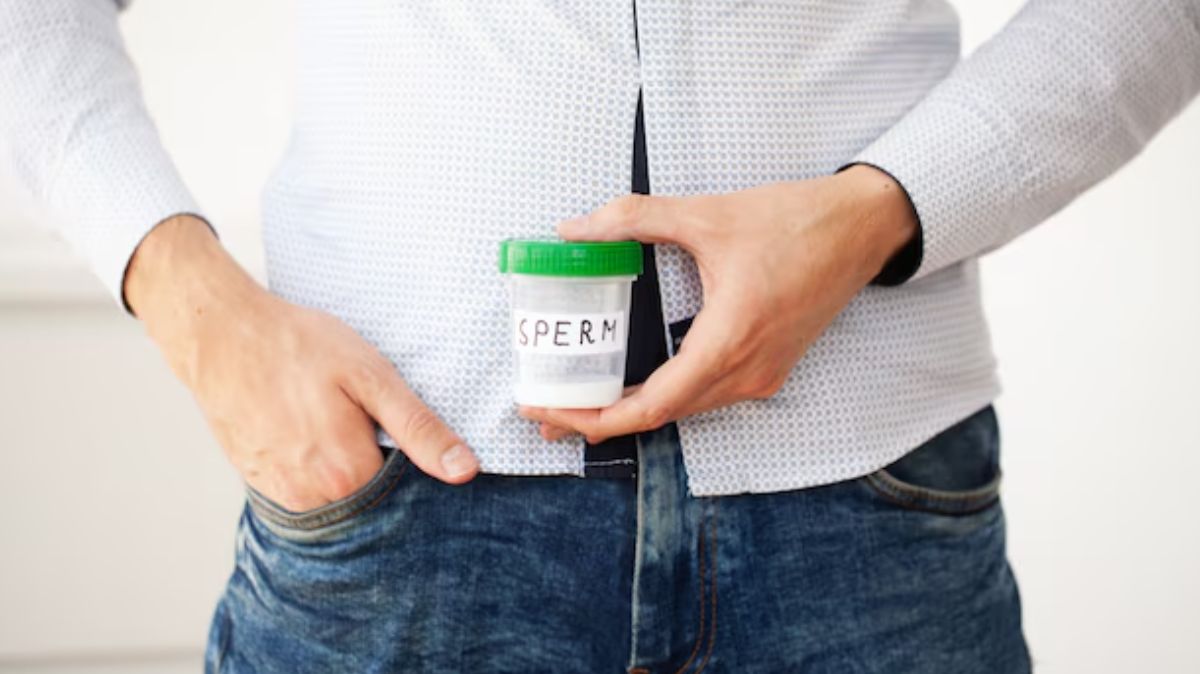
A semen analysis can assess factors such as:
- Sperm concentration
- Total sperm number
- Sperm motility
- Sperm morphology
- Semen volume
A semen test is much more useful than trying to judge fertility based only on how often a man ejaculates.
ALSO READ- Feeling Sad After Sex? Doctor Breaks Down Postcoital Dysphoria
Conclusion
Normal, day-to-day sexual activity will not lead to loss of sperm or to any problems with fertility in healthy men. It is common for men to have a reduction in semen volume and sperm concentration per sample, which may be temporary, if the individual ejaculates daily, but does not necessarily indicate decreased fertility.
Sexual intercourse every 1-2 days within the fertile window is a practical approach and evidence-based for couples attempting to conceive. Daily sex is also acceptable. However, a semen analysis will give a much better idea than just changing sex frequency if conception is delayed.
FAQ
Does a delay in ejaculation for several days bring more strength to the sperm?
Not necessarily. Semen volume and sperm concentration have been shown to increase with longer periods of abstinence.Is it safe to have sex daily at low sperm count?
This will depend upon the cause and severity of the low sperm count. Some men may find slightly longer intervals helpful, as the concentration of sperm in a single sample may be reduced with daily ejaculation.
All possible measures have been taken to ensure accuracy, reliability, timeliness and authenticity of the information; however Onlymyhealth.com does not take any liability for the same. Using any information provided by the website is solely at the viewers’ discretion. In case of any medical exigencies/ persistent health issues, we advise you to seek a qualified medical practitioner before putting to use any advice/tips given by our team or any third party in form of answers/comments on the above mentioned website.
How we keep this article up to date:
We work with experts and keep a close eye on the latest in health and wellness. Whenever there is a new research or helpful information, we update our articles with accurate and useful advice.
-
Current Version
Sep 10, 2026 17:16 IST
Published By : Vivek Kumar
Reviewed By : Dr Vijay S Dahiphale