
Chhath Puja is a 4 day long festival celebrated in honor of Sun God and Chhathi Maiya. It is celebrated all around Bihar, in parts of Nepal and Uttar Pradesh, and features abstaining from food, prayers and offering of traditional items. One of the most significant parts of celebration is the deep fried sweet called Thekua which is made from wheat flour, jaggery, ghee / oil.
But to prepare a lot of prasad they have to fry several batches. A question which comes to mind is whether or not reusing cooking oil compromises food safety? Oil that is heated more than once may produce potentially harmful compounds.
What Happens To Cooking Oil When It Is Reheated?
According to Prof Dr SM Fayaz, Lead and Senior Consultant, Internal Medicine, KIMS Hospitals, Mahadevapura, “Oil that has been heated again and again breaks down and forms harmful compounds. Prasad such as thekua is deep fried, so the oil matters. Fresh oil or ghee is the safest choice.”
Dr Fayaz further explains, “As the oil is heated again, the fat molecules break down into other molecules because of the reactions with oxygen and water in the food, which also change as the oil is used over a period of time.”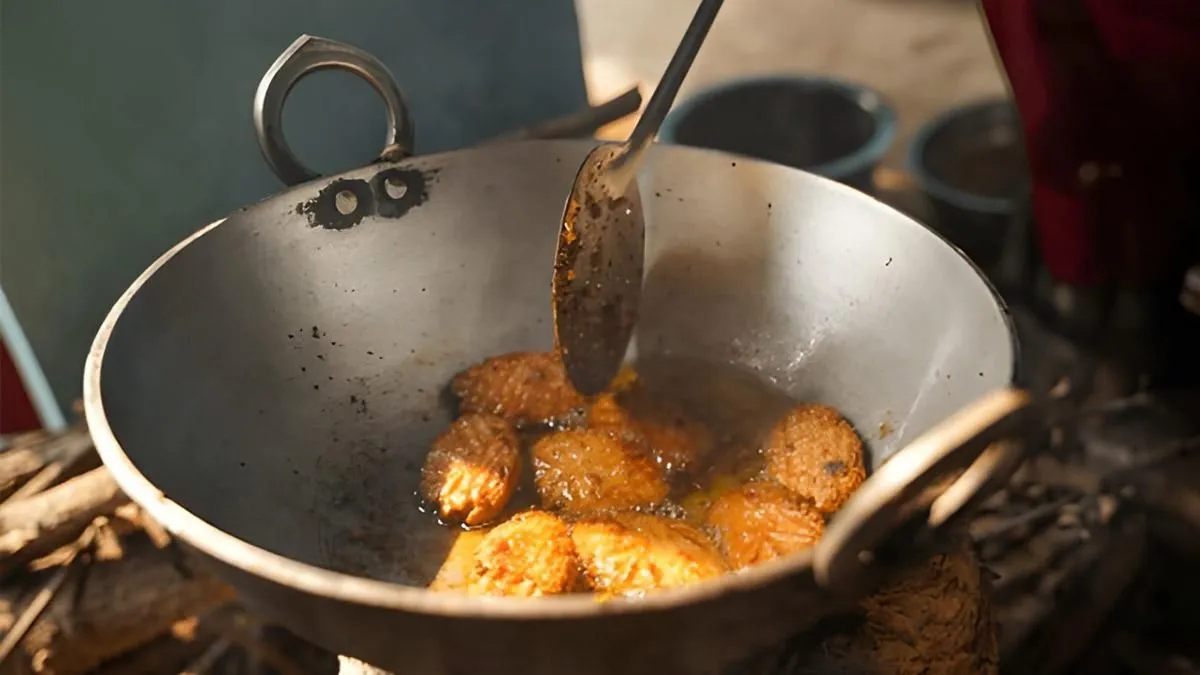 chhath thekua
Oxidation and chemical changes take place in the oils during repeated heating. It can result in the formation of total polar compounds (TPC), free radicals and other undesirable by-products. Additionally, the oil could be depleted of natural antioxidants like Vitamin E.
The FSSAI has established a TPC limit for frying oil up to 25%. Any oil that goes over this is not suitable for eating. A 2023 study published in Discover Food, examining cooking oil used by street food vendors in Lucknow, found that repeated frying increased free fatty acid and peroxide values while reducing natural antioxidant content.
ALSO READ- Ghee Vs Coconut Oil: Which Is Better For Indian Digestion?
Is Reusing Cooking Oil Once Always Unsafe?
“Light, short frying and moderate heat is less harmful as compared to repeat deep frying, however, repeated frying with the same oil is the safest rule,” says Prof Dr SM Fayaz.
Not all reuses are equal. Oil which is heated only at a controlled temperature for a short time will suffer less degradation than oil heated numerous times over a period of several hours.
FSSAI suggests to filter the leftover frying oil and use it for curries or vegetables in a day or two. It also advises against the frequent frying. A 2022 study published in Food Control examining frying practices among street food vendors in Kashmir reported considerable degradation in several in-use frying oil samples.
How Can You Tell If Cooking Oil Should Be Discarded?
Oil darkens and becomes thicker when its quality has reduced, says Prof Dr SM Fayaz.
Be aware of these indicators:
- Unusually thick, dark or murky oil.
- Smoke or a smell of burning that is bluish grey.
- Foam on the surface that does not go away.
- Stickiness or off-flavours.
- Bitter or burnt taste in fried food.
These signs are signs of deterioration, but to determine the exact TPC, lab testing must be performed.
Why Does Reusing Oil Matter During Chhath Puja?
Prof Dr SM Fayaz says, “Thekua is fried and hence the oil is important – the fresh oil or ghee is safest. Multi-batches of thekua are fried while making Chhath. Oil can be broken down by reusing it for a few hours.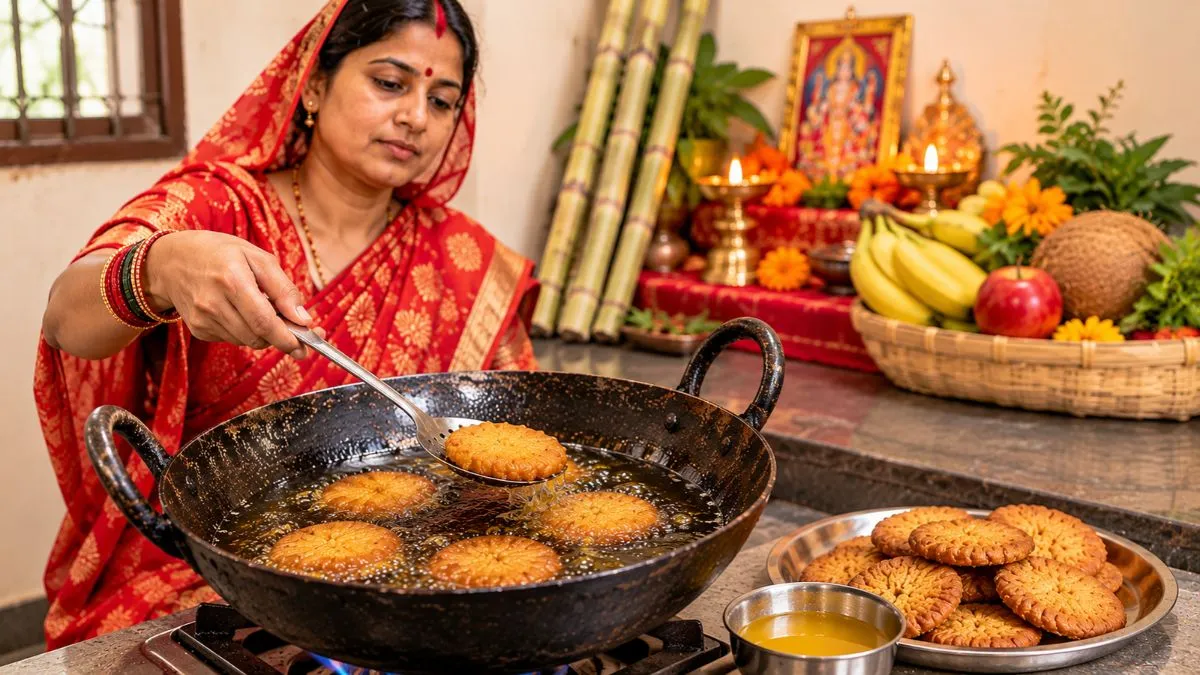 chhath thekua oil reuse
There are three cautions to take:
- Excessive frying times: Degrades oil each time it is heated.
- Crumbs burned: Crumbs can burn and cause impacts on the quality of the oil.
- Wider consumption: Prasad is given to children, older people and the whole family.
Fasting individuals should also keep a low intake of fried foods at the beginning of the period as this may lead to discomfort in digestion.
How Can You Prepare Chhath Prasad More Safely?
Prof Dr SM Fayaz suggests “use fresh oil or ghee, small quantity of oil should be used for frying and it should not be heated repeated to keep the quality of prasad.”
Follow these precautions:
- Always use fresh oil/ghee while making thekua.
- Cook in smaller quantities at medium heat.
- Avoid allowing the oil to smoke.
- Scrape out of pan any burnt crumbs between batches.
- Never use fresh oil mixed with old, degraded oil.
- Do not reuse the used oil for deep frying again.
- Strain good used oil and use for other preparation within day or two.
- Never pour used oil down the drain. Dispose of it appropriately.
Keep ready to eat prasad in a clean, dry and airtight container.
Who Should Be More Careful About Eating Deep-Fried Prasad?
People suffering from any metabolic or digestive ailment should be conscious of the amount of fried prasad they eat, says Prof Dr SM Fayaz.
Individuals at greater risk for breast cancer should be more vigilant than the following people:
- Those with high blood pressure or heart disease.
- People with diabetes or fatty liver disease.
- People suffering with acidity, gastritis or acid reflux.
- Older people and the elderly children.
When Should You Seek Medical Advice?
It is important to get a check-up by a physician, says Prof Dr SM Fayaz, if digestive symptoms persist after a meal.
If stomach discomfort is on-going, vomiting, diarrhoea or frequent indigestion, seek medical help. Urgent medical attention is needed when someone has chest pain, extreme breathlessness and palpitations.
ALSO READ- Can Pregnant Women Fast for 36 Hours During Chhath Puja? We Asked An Expert
Conclusion
“Use fresh oil or ghee for cooking, cook in small quantities and discard the oil when it appears dark and smells burnt for Chhath prasad to prevent harmful compounds added to the oil due to repeated use, which can increase the risk of high blood pressure, heart disease and liver problems”, Prof Dr SM Fayaz says.
Cooking oil is not necessarily healthy when used repeatedly for long periods of time. Using fresh oil or ghee and avoiding repeated frying are simple precautions taken for Chhath Puja that makes it safer to use traditional prasad.
FAQ
1. Does adding fresh oil to used cooking oil make it safe for frying?
No. Adding fresh oil does not reverse the chemical changes in degraded oil. It is better to discard deteriorated oil rather than mix it with fresh oil.2. Is ghee better than refined oil for preparing thekua?
Both can be used, depending on the preparation and temperature. Fresh ghee is a traditional choice, but it is still important to avoid overheating it or repeatedly using it for deep frying.
All possible measures have been taken to ensure accuracy, reliability, timeliness and authenticity of the information; however Onlymyhealth.com does not take any liability for the same. Using any information provided by the website is solely at the viewers’ discretion. In case of any medical exigencies/ persistent health issues, we advise you to seek a qualified medical practitioner before putting to use any advice/tips given by our team or any third party in form of answers/comments on the above mentioned website.
How we keep this article up to date:
We work with experts and keep a close eye on the latest in health and wellness. Whenever there is a new research or helpful information, we update our articles with accurate and useful advice.
-
Current Version
Nov 13, 2026 13:12 IST
Published By : Vivek Kumar
Reviewed By : Prof Dr S M Fayaz