
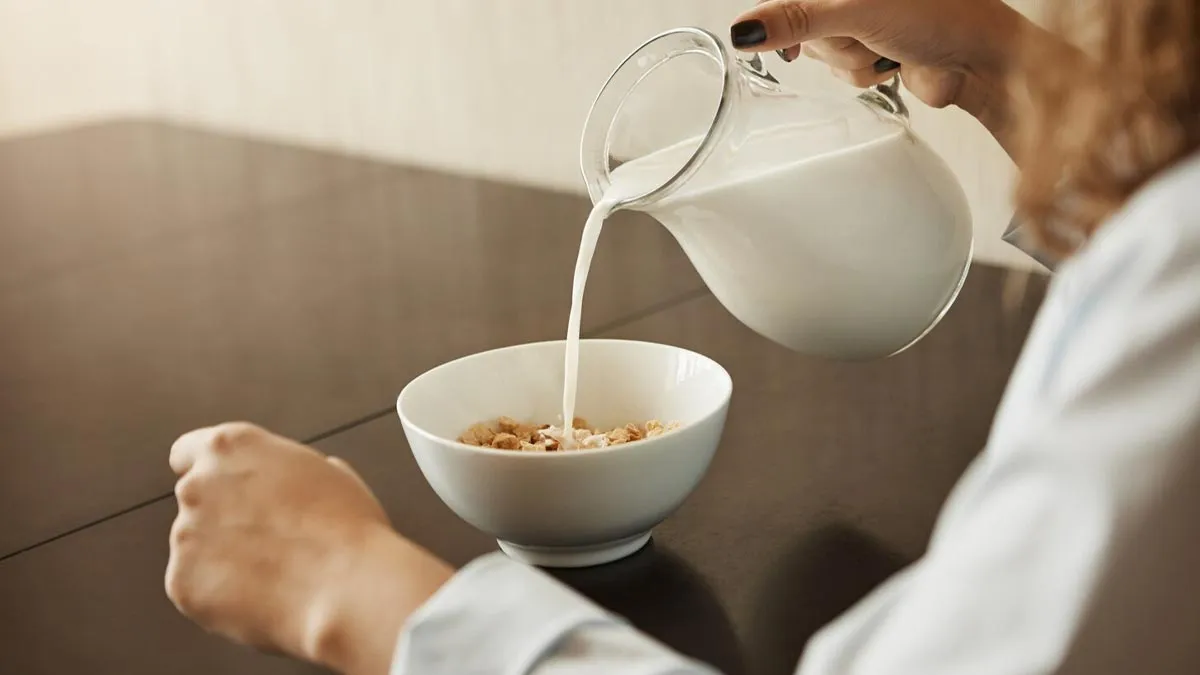
We are used to boiling milk before drinking it or adding it to our cereals. While boiling once is okay, is it safe to repeatedly heat milk? Many people wonder whether repeatedly boiling milk makes it lose its nutritional value and protein content? While this practice may reduce some of its overall nutritional quality, whether it ruins all its health benefits or not is something that needs a closer look.
To understand this better, we reached out to our expert, Ms Edwina Raj, Head of Services, Clinical Nutrition and Dietetics, Aster CMI Hospital, Bangalore.
Boiling Milk Repeatedly: Can It Kills The Nutrients?
Let us jump straight to the main point: can boiling milk repeatedly ruin its health benefits? Answering this, Ms Raj says, “Boiling milk does not destroy its protein content. This is because the major proteins in milk, including casein and whey, are quite stable and continue to remain available for the body to use even after heating.”
The expert further explains, “When milk is boiled, the proteins may undergo structural changes called denaturation, but this does not mean they are lost or become harmful. And the nutritional value of the protein remains mostly the same, although very high temperatures or prolonged heating for a long time can slightly affect protein quality.”
 milk boil nutrition 1
What are The Risks of Overboiling Milk?
If a milk is boiled repeatedly, are there any risks it poses to health once consumed? Ms Raj says that boiling milk multiple times can cause other changes, such as:
- May reduce some of its overall nutritional quality. This is because heat-sensitive nutrients such as vitamin B12, folate, and vitamin C can decrease with repeated heating.
- Continuous boiling also leads to water evaporation, making the milk thicker and slightly changing its nutrient concentration.
- Repeated heating can also affect the taste, smell, and texture of milk by creating a cooked flavour.
- It can also lead to formation of a thicker layer on the surface, which can cause some changes in the interaction between proteins, fats, and sugars. But important nutrients such as protein, calcium, and fat are generally not destroyed significantly.
 milk boil nutrition 2
What Study Says About The Effects of Boiling Milk
A 2011 study, published in the Journal of American Science, examined what happens to the bacteria and overall quality of cow's and buffalo's milk when it is boiled for different amounts of time.
The researchers discovered that boiling milk for just half a minute to one minute can dramatically minimise the number of bacteria present in both types of milk. The heat from boiling successfully kills the active, vegetative bacterial cells, making the milk significantly safer to drink.
However, boiling does not completely sterilise the milk. The study adds that it leaves behind certain heat-resistant bacterial spores, particularly from species such as Bacillus cereus and Micrococcus luteus. While these spores survive the heat, the research noted that storing the boiled milk in cold temperatures stops them from growing and multiplying.
Moreover, the researchers compared boiling to Ultra-High Temperature (UHT) processing (a common commercial method used for sterilising milk). They found out that boiling at home actually impacts the overall chemical quality of the milk much less than the intense commercial UHT process does. Ultimately, the study concluded that boiling milk is a highly effective, low-impact method for decontaminating milk and preventing foodborne illnesses.
 milk boil nutrition 3
Tips To Safely Boil Milk and Retain Its Health Benefits
Ms Raj says that to maintain the best quality and nutritional benefits of milk, it is better to:
- Boil it only once until it reaches a proper boil.
- Allow it to cool.
- Store it safely in a clean airtight container.
- Reheat only the amount required before consumption.
“Repeatedly boiling the same milk is unnecessary and may reduce some vitamins and affect the taste, but it does not make the milk unhealthy or remove its main protein benefits, so families can continue consuming boiled milk while following proper storage and handling practices,” concludes the expert.
ALSO READ - The History of Pasteurisation: How Boiling Milk Saved Millions from Deadly Food Poisoning
Conclusion
While repeatedly boiling milk does not destroy its core protein content, it can reduce the levels of heat-sensitive vitamins and change its flavor and texture. Studies support that a single, brief boil is highly effective at killing harmful bacteria without significantly harming the milk's overall nutritional quality. To maximise both safety and health benefits, it is best to boil milk just once, cool it properly, and only reheat the specific portion you intend to drink.
FAQ
Does boiling milk destroy calcium?
Boiling milk does not significantly destroy or remove its total calcium content, though it can cause very minor shifts in mineral solubility or chemical form.Does boiling milk reduce its lactose content?
No, boiling milk does not reduce the amount of lactose in a meaningful way.
All possible measures have been taken to ensure accuracy, reliability, timeliness and authenticity of the information; however Onlymyhealth.com does not take any liability for the same. Using any information provided by the website is solely at the viewers’ discretion. In case of any medical exigencies/ persistent health issues, we advise you to seek a qualified medical practitioner before putting to use any advice/tips given by our team or any third party in form of answers/comments on the above mentioned website.
How we keep this article up to date:
We work with experts and keep a close eye on the latest in health and wellness. Whenever there is a new research or helpful information, we update our articles with accurate and useful advice.
-
Current Version
Aug 31, 2026 16:52 IST
Published By : Shruti Das
Reviewed By : Edwina Raj