
Periods can change considerably in your 40s. A regular cycle can all of a sudden become heavier, longer or irregular. For many women, this happens during perimenopause, the transition towards menopause. But more blood loss isn't necessarily due to hormones.
Fibroids, polyps, adenomyosis and thyroid problems can also affect menstrual flow. Therefore, hormonal fluctuations are a normal cause of heavier periods after 40, but if your periods suddenly or always change, it should be investigated, not ignored, as “just perimenopause”. Here is why your period may suddenly become heavier and when it needs medical attention.
Why Can Periods Become Heavier After 40?
Dr Lavanya Kiran, Director and Lead Consultant, Obstetrics, Gynaecology, KIMS Hospitals, Electronic City, Bengaluru, explains, “This is one of the most common concerns women raise in their 40s, and the honest answer is that it's usually hormonal, tied to the gradual shift toward perimenopause, though it's genuinely worth ruling out other causes rather than assuming it's ‘just hormones.’”
- Perimenopause can begin in the 40s. During this stage, ovulation becomes less predictable. Some cycles may occur without ovulation, known as anovulation.
- When ovulation does not happen, the usual progesterone rise may be absent. Oestrogen can continue stimulating the uterine lining, which may build up differently and then shed more heavily.
- Hormonal changes during perimenopause are also unpredictable. One month may bring a heavy period, while another may be lighter or skipped.
Is Perimenopause The Only Cause?
Dr Lavanya Kiran says, “It's important not to assume perimenopause is automatically the cause without ruling out other possibilities, since several conditions become more common with age and can also cause heavier periods.”
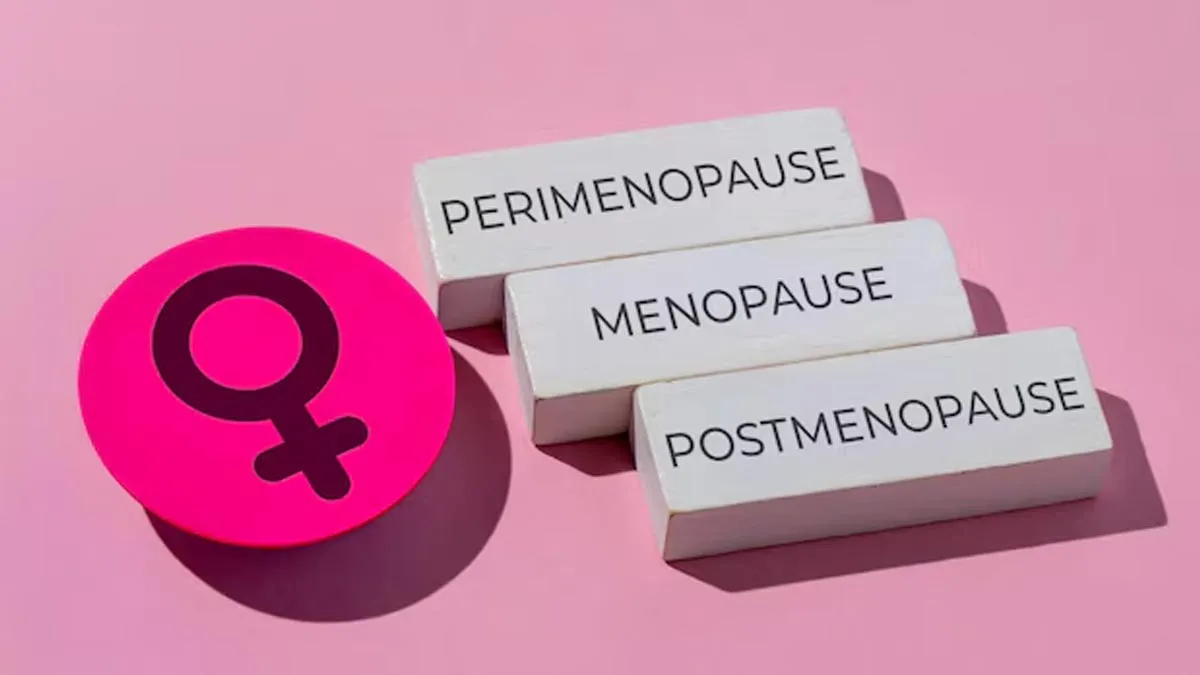
Other possible causes include:
- Fibroids: Non-cancerous growths in the uterus that can cause heavy or prolonged bleeding.
- Polyps: Growths in the uterine lining that may cause irregular bleeding.
- Adenomyosis: Uterine-lining-like tissue growing into the muscular wall of the uterus. It can cause heavy and painful periods.
- Thyroid disorders: Thyroid disorders can impact the menstrual cycle.
- Medicines: Blood-thinning medications and other medications may cause bleeding.
- Endometrial Hyperplasia: The uterine lining thickens and grows too much.
- Less common, but important to consider: Endometrial or uterine cancer.
A 2024 Cureus study of women aged 40–55 with heavy menstrual bleeding found that fibroids were the most common non-endometrial cause, highlighting why abnormal bleeding in this age group should be assessed.
How Heavy Is Too Heavy?
Dr Lavanya Kiran explains, “Needing to change a pad or tampon every hour or two for several consecutive hours, passing clots larger than a coin, or bleeding for longer than seven days are signs that the bleeding may be heavier than your usual pattern.”
Other warning signs include:
- Needing double protection to manage the flow
- Bleeding that disrupts things at work, sleep or daily life
- Feeling unusually tired or weak
- Dizziness or breathlessness, which may be caused by anaemia
There is no single amount of bleeding that is “too heavy” for everyone. A significant change from your usual menstrual pattern matters.
Why Should Heavy Bleeding After 40 Be Checked?
Dr Lavanya Kiran says, “Persistent heavy bleeding after 40 should always be properly evaluated rather than dismissed as a normal part of getting older.”

A 2023 Asian Pacific Organization study of women with perimenopausal abnormal uterine bleeding found endometrial hyperplasia in 7.5% and endometrial cancer in 1.2% of participants. The study population had already been selected because they had abnormal bleeding, so these figures should not be taken as the risk for all women in their 40s.
The finding does, however, reinforce why persistent or unusual bleeding should not simply be attributed to perimenopause.
How Is The Cause Of Heavy Periods Diagnosed?
Dr Lavanya Kiran explains, “A detailed history of cycle changes, flow patterns, and associated symptoms is usually the starting point.”
Depending on your symptoms, a doctor may recommend:
- Blood tests to check for anaemia
- Thyroid testing when appropriate
- Pregnancy testing when relevant
- Pelvic or transvaginal ultrasound
- Endometrial biopsy in selected women
- Hysteroscopy when the inside of the uterus needs closer examination
A 2022 Obstet Gynecol Int. study from PubMed also examined transvaginal ultrasound in perimenopausal women with abnormal uterine bleeding and found that endometrial thickness could help identify women who may need further evaluation. However, ultrasound findings need to be interpreted alongside symptoms and other clinical factors.
When Should You See A Doctor?
Dr Lavanya Kiran says, “If bleeding is heavy enough to interfere with daily activities or requires very frequent pad or tampon changes,” it is worth seeking medical advice.
See a gynaecologist if:
- Your periods suddenly become much heavier.
- Bleeding lasts longer than seven days.
- You bleed between periods or after sex.
- You develop new pelvic pain or pressure.
- You feel persistently tired, dizzy or breathless.
- Your usual cycle pattern changes dramatically.
- Heavy bleeding continues for several cycles.
Once menopause has occurred, any vaginal bleeding after 12 months without a period needs medical assessment.
ALSO READ- What is Period Brain? Doctor Explains Why You Feel Foggy and Forgetful During Menstruation
Conclusion
Dr Lavanya Kiran says, “The honest answer is that it's usually hormonal, tied to the gradual shift toward perimenopause, though it's genuinely worth ruling out other causes rather than assuming it's ‘just hormones.’”
One of the changes that may occur in the 40s is heavier periods. However, any significant, persistent or repeated bleeding that women experience suddenly should not be taken as 'normal ageing '. Keep a record of your periods, including their duration, flow (heavy or light), and if there are any clots or pain. If this change continues or it begins to impact your life, discuss with a gynaecologist.
FAQ
Are there any health implications if after age 40, one experiences heavy periods?
Yes. Excessive blood loss through menstruation over a period of time may cause iron-deficiency anaemia. Some warning signs are fatigue, weakness, dizziness and breathlessness. A blood test may be used to look for anaemia and to see if iron treatment is necessary.Does Perimenopause cause heavy periods one month and light the next?
Yes. Periods may be irregular during perimenopause due to hormonal changes. A cycle can be a heavy one; the next can be lighter, shorter or omitted. It can help your doctor know if these changes are typical of the menopausal transition.
All possible measures have been taken to ensure accuracy, reliability, timeliness and authenticity of the information; however Onlymyhealth.com does not take any liability for the same. Using any information provided by the website is solely at the viewers’ discretion. In case of any medical exigencies/ persistent health issues, we advise you to seek a qualified medical practitioner before putting to use any advice/tips given by our team or any third party in form of answers/comments on the above mentioned website.
How we keep this article up to date:
We work with experts and keep a close eye on the latest in health and wellness. Whenever there is a new research or helpful information, we update our articles with accurate and useful advice.
-
Current Version
Sep 09, 2026 18:14 IST
Published By : Vivek Kumar
Reviewed By : Dr Lavanya Kiran