
Not many would believe, Heroin was once a legal cough medicine that was sold in pharmacies around the world. It was long before when it was known for being one of the most notorious illegal drugs. In the late 1800s and early 1900s, doctors routinely gave people heroin for coughs that were associated with tuberculosis and pneumonia, two of the most deadly illnesses of the time.
The reason why, In an era before antibiotics and few other medications were available for a patient with chronic illnesses who was coughing, the short answer is that heroin was the most effective medicine available for suppressing a cough.
Why Was Heroin Prescribed for Tuberculosis and Pneumonia?
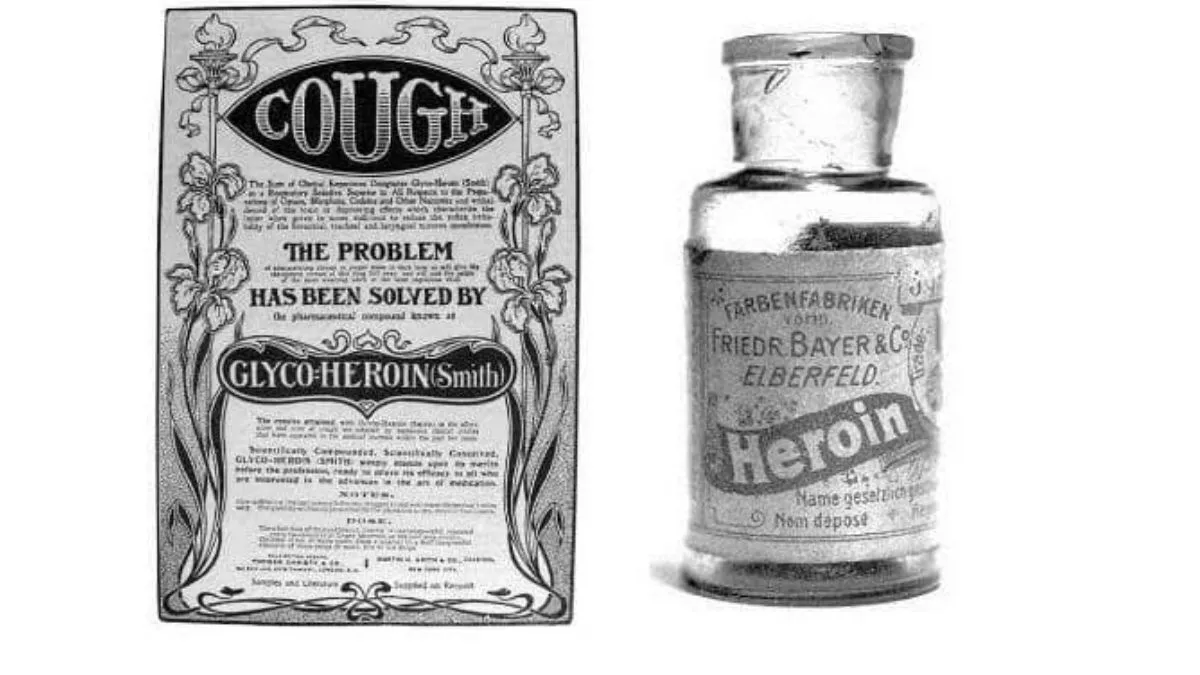 Heroin as Cough Relief
image credit: wikipedia
Tuberculosis and pneumonia were among the top causes of death in the world in the 1890s. Both illnesses affected the sufferer with constant, tiring coughing, from which the sufferer did not get any rest or sleep, and therefore their condition was aggravated by the lack of rest and sleep.
According to Yale psychiatry and medical history professor David Musto, the real demand of that era wasn't for a painkiller, it was for an effective cough remedy. Codeine, the standard cough treatment at the time, simply wasn't strong enough for the severe coughing fits tuberculosis and pneumonia caused.
ALSO READ- Why Did Europeans Eat Mummies? History of Mummy Powder Medicine Explained
The Science Behind Heroin's Cough-Suppressing Power
Heroin, chemically known as diacetylmorphine, was first synthesised in 1874 by English chemist Charles Romley Wright, then developed commercially by Bayer chemist Heinrich Dreser in 1898, as per OZY.

Bayer physician Dr Floret tested it directly on patients with bronchitis, asthma, and tuberculosis, and found it worked faster and more reliably than codeine, even in cases codeine had failed to help, as per UNODC historical bulletin.
Dreser presented it to the Congress of German Naturalists and Physicians, claiming it was ten times more effective as a cough medicine than codeine, with only a tenth of the toxic effects.
How Bayer Marketed Heroin as a Wonder Drug
Bayer moved quickly to commercialise the discovery:
- By 1898, heroin was being sold as both a pain reliever and cough suppressant
- It was promoted as a safer substitute for morphine, whose addictive risks were already known.
- By 1899, Bayer was producing roughly a ton of heroin annually, exporting it to 23 countries
- It was sold as lozenges, tablets, elixirs, and cough syrups, widely used for bronchitis, whooping cough, and tuberculosis-related coughing.
When Doctors Realised Heroin Wasn't Safe
The reassessment came fairly quickly. As early as 1899, German doctor E. Harnack warned it might be a poison, and other physicians soon reported patients building tolerance and needing higher doses.

By 1902, cases of "heroinism," what we'd now call addiction, were being documented across the US and Europe. Bayer stopped producing heroin by 1913, and it was banned in most countries by the 1930s.
ALSO READ- Why Was Depression Once Blamed on Black Bile? The 2,500-Year-Old Theory Explained
Conclusion
Heroin's brief career as cough medicine wasn't a reckless, fraudulent medical method. It was a genuine attempt to solve a desperate medical problem with the tools available at the time.
Its downfall came from the very quality that made it so effective: a powerful action on the brain that relieved coughing, but also created dependence doctors hadn't anticipated.
thumbnail image credit: Google Gemini AI
FAQ
1. Is heroin still used medically anywhere today?
A pharmaceutical form is still used in a limited number of countries, including the UK, under strict hospital control, primarily for severe pain. It is no longer used to treat coughs.2. What replaced heroin as a cough treatment after it was banned?
It continued to be used, and later, safer synthetic cough suppressants were developed, which do not pose the same addiction potential.
All possible measures have been taken to ensure accuracy, reliability, timeliness and authenticity of the information; however Onlymyhealth.com does not take any liability for the same. Using any information provided by the website is solely at the viewers’ discretion. In case of any medical exigencies/ persistent health issues, we advise you to seek a qualified medical practitioner before putting to use any advice/tips given by our team or any third party in form of answers/comments on the above mentioned website.
How we keep this article up to date:
We work with experts and keep a close eye on the latest in health and wellness. Whenever there is a new research or helpful information, we update our articles with accurate and useful advice.
-
Current Version
Aug 18, 2026 18:27 IST
Published By : Vivek Kumar