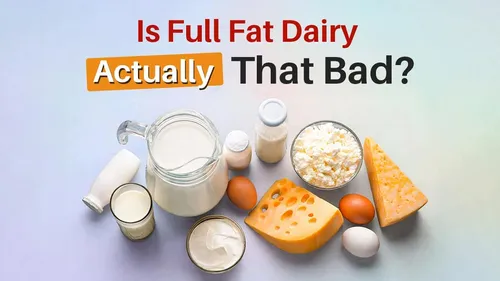
For years, people have been advised to choose skimmed milk, low-fat yoghurt and reduced-fat dairy products to protect their heart health and manage their weight. The reason is simple: dairy fat contains saturated fat, which can raise LDL (bad) cholesterol. However, a new study from Canada suggests that full-fat dairy may not be as harmful as previously believed.
The 12-week study, conducted by researchers at the University of Toronto and published in the Journal of Nutrition, found that consuming three servings of full-fat dairy daily did not lead to harmful changes in body weight, body composition, or blood cholesterol among adults who were overweight or obese.
What Did the Study Find?
The study included 74 adults who were overweight or obese. They were randomly divided into three groups and followed different dietary plans.
One group followed a calorie-restricted diet with little dairy. Another consumed three servings of dairy daily without deliberately increasing their calorie intake, while the third also had three daily servings but no specific calorie restriction.
After 12 weeks, researchers found no meaningful differences in body weight, body composition, energy metabolism, or blood cholesterol among the groups. Participants who consumed more dairy also showed improvements in blood pressure and had higher intakes of calcium, protein, and vitamin D.
Why Is Full-Fat Dairy Being Reconsidered?
The findings challenge the assumption that all saturated fat has the same effect on the body, regardless of its food source.
Researchers have suggested that the structure of dairy products, known as the dairy matrix, may influence how the body digests and processes their nutrients. Dairy contains proteins such as casein and whey, along with fat and other nutrients. These components interact during digestion and may affect how nutrients are released and absorbed.
However, scientists are still investigating whether saturated fat from dairy behaves differently from that found in foods such as butter and red meat.
Also Read: Dairy Fat Linked To Lower Dementia Risk?
Should You Switch to Full-Fat Milk?
The researchers have cautioned against making sudden dietary changes based on these findings. The study was relatively small and lasted only 12 weeks. It cannot establish whether eating full-fat dairy over several years affects heart disease risk or provides lasting health benefits.
The findings may also not apply equally to everyone. Older adults who are overweight or obese may benefit from low-fat dairy to reduce calorie intake while maintaining muscle mass. Meanwhile, emerging evidence suggests that full-fat dairy may be a suitable option for young children.
What Does This Mean for Your Daily Diet?
The study does not mean that full-fat dairy is automatically healthier than low-fat alternatives. It highlights the need to consider the overall food and dietary pattern rather than judging a food only by one nutrient.
Milk, yoghurt and other dairy products provide important nutrients, including calcium and protein. However, people with high cholesterol, heart disease, or specific dietary requirements should discuss suitable dairy choices with their doctor or dietitian.
For now, both low-fat and full-fat dairy can fit into a balanced diet, depending on an individual's nutritional needs, calorie requirements, and health conditions. More long-term research is needed before dietary recommendations can be changed.
All possible measures have been taken to ensure accuracy, reliability, timeliness and authenticity of the information; however Onlymyhealth.com does not take any liability for the same. Using any information provided by the website is solely at the viewers’ discretion. In case of any medical exigencies/ persistent health issues, we advise you to seek a qualified medical practitioner before putting to use any advice/tips given by our team or any third party in form of answers/comments on the above mentioned website.
How we keep this article up to date:
We work with experts and keep a close eye on the latest in health and wellness. Whenever there is a new research or helpful information, we update our articles with accurate and useful advice.
-
Current Version
Nov 09, 2026 19:52 IST
Published By : Chanchal Sengar