


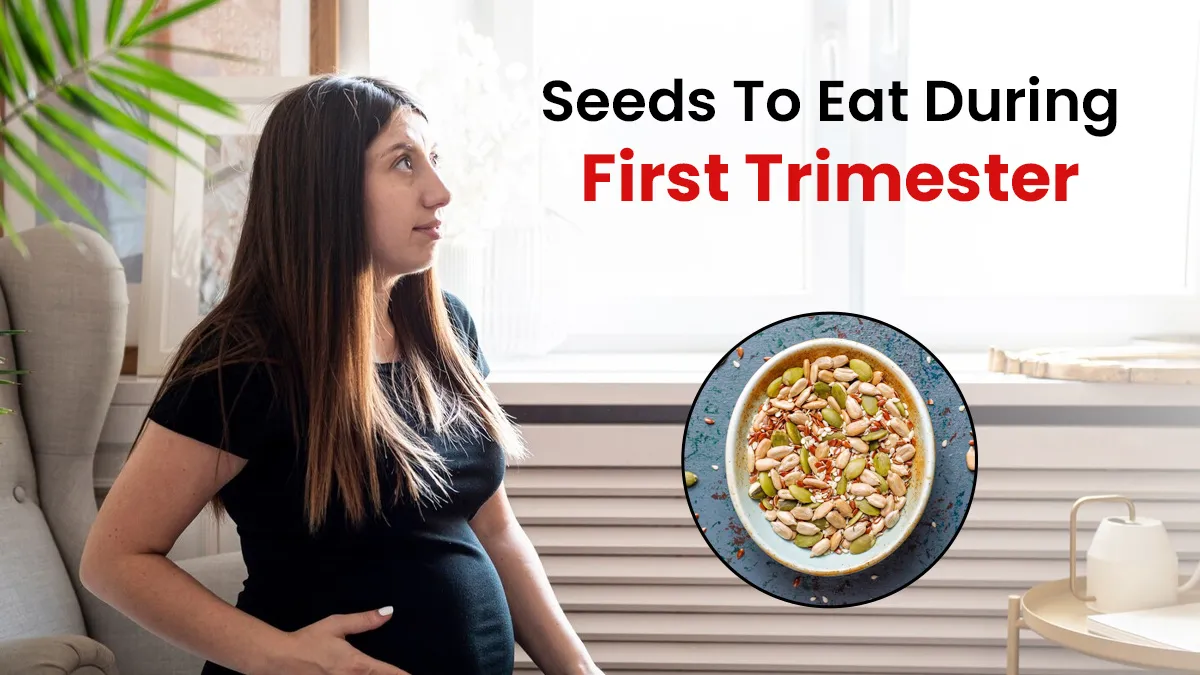
Pregnant women are often handed an overwhelming list of foods to avoid, yet far fewer conversations focus on what to include. The first trimester lays the groundwork for fetal development, leading to severe hormonal changes in the body, resulting in mood swings, changes in dietary habits, and other health concerns. However, this is also the time when the body's need for nutrition increases dramatically.
Table of Content:-
While the first trimester requires you to be extra cautious about what you eat, certain seeds help you fulfil your daily dose of required nutrition and protein. Dr Rashmi Dharaskar, Senior Consultant, Obstetrics and Gynaecology, Surya Mother and Child Super Speciality Hospital, Pune, suggested some seeds that help fulfil the crucial need in fetal growth during the first trimester. Read ahead to know the seeds to include in your diet during the first trimester of your pregnancy.
Seeds To Eat During the First Trimester Of Your Pregnancy
According to a study published in Science Direct, nutritional needs during pregnancy are critical for both maternal and fetal health, and seeds work as a superfood in this regard. They play a significant role in supporting fetal development and minimising the risk of complications like gestational diabetes, hypertension, and preterm birth.
Also Read: World Diabetes Day 2025: Diabetic? Expert Shares Tips To Boost Your Odds of a Healthy Pregnancy
Dr Rashmi Dharaskar explained, “Certain nutrients like folate, omega-3 fatty acids, iron, calcium, magnesium, protein, and dietary fibre become critical building blocks because they have a direct impact on neural tube formation, early brain development, hormonal balance, and maternal energy levels.” She further underlined that a surprisingly powerful source of these micronutrients can be seeds, which are commonly available in your kitchen.
Here are six seeds suggested by Gynaecologist Dr Dharaskar, that are considered best to consume during the first trimester of pregnancy:-1764962415277.jpg)
Sunflower seeds
These seeds bring folate, vitamin E, and healthy fats that help protect developing cells from oxidative stress. Folate is essential during the first few weeks as it supports the critical development of the baby's neural tube. Dr Dharaskar advised that, small daily serving of sunflower seeds can meet the mother's daily vitamin intake.
Chia seeds
Chia seeds provide omega-3s, fibre, and protein that support early brain development while also easing common first-trimester constipation. The fibre content in these seeds helps maintain regular digestive health, which is considered a common issue in early pregnancy.
Also Read: Cervical Cancer Screening Just Got Simpler and More Accessible: American Cancer Society Issues New Guidelines, Read Here
Pumpkin seeds
Pumpkin seeds are rich in iron, zinc, and magnesium, which strengthen immunity and reduce fatigue. Iron plays an important role in supporting the increased blood volume and also in combating anaemia. As suggested by the gynaecologist, they make for a great, simple snack to boost energy during periods of morning sickness.
Flaxseeds
Flaxseeds provide plant-based omega-3s that support hormonal regulation in the early months. They also contain lignans, which may assist in balancing the hormonal shifts affecting the first trimester.-1764962480932.jpg)
Hemp hearts
These seeds add a complete protein profile with calcium and magnesium, both of which are needed for bone formation and muscle function in the mother and the baby. Their protein content helps meet the dramatically increased protein requirement for tissue building. Because of their simple and nutty flavour, you can add hemp hearts to almost any dish.
Watermelon seeds
Watermelon seeds are full of iron, healthy fats, and vitamin B. This supports red blood cell production, eventually supporting in diminishing weakness throughout the first trimester. Their rich Vitamin B factor helps improve metabolism, and micronutrients aid in maintaining optimal blood health.
All of these seeds are compact, nutrient-dense, and easy to add to meals, offering an efficient way to bridge common dietary gaps. Dr Dharaskar shared that a small daily blend of these six seeds not only improves nutritional intake but also supports smoother early pregnancy symptoms.
Also Read: How Much ‘Good Fat’ Is Needed In PCOS? Dietitian Explains
How To Consume?
There are several quick and easy ways to include the above seeds in your daily diet. Here are a few advised by Dr Dharaskar:
- These seeds can be ground and added to milk, curd, or yoghurt dip so that pregnant women can easily consume them with meals.
- Consciously adding these seeds to meals after cooking can offer a simple, effective upgrade to maternal nutrition during the most critical stage of fetal development.
- During pregnancy, it is advised to eat something light every two to three hours, and eating a spoonful of plain seeds once a day directly does the needful.
- You can also make a powder by mixing these seeds in a mixer and adding them to any of your meals.
- Making small balls of seeds using honey or desi ghee and eating one or two balls throughout the day is also a delicious way to consume them.
Bottomline
Seeds are generally considered healthy, but during pregnancy, they become an essential part of the mother-to-be's diet. They not only help in fetal development but also help boost pregnant women’s strength during the final labour days. While these seeds do not have any side effects, it is important to discuss with your doctor the best way you should take them before including them in your diet.
Also watch this video
How we keep this article up to date:
We work with experts and keep a close eye on the latest in health and wellness. Whenever there is a new research or helpful information, we update our articles with accurate and useful advice.
Current Version
Jan 04, 2026 15:03 IST
Published By : Sameeksha Sharma