
Smoking is commonly associated with lung disease, but its harmful effects on cholesterol levels and cardiovascular health are equally serious. Tobacco smoke alters how fats function in the bloodstream by lowering High-Density Lipoprotein (good cholesterol or HDL), increasing triglycerides, damaging artery walls, and making Low-Density Lipoprotein (bad cholesterol or LDL) more prone to plaque formation. These effects significantly increase the risk of heart attack, stroke, and atherosclerosis, even in people whose cholesterol levels appear only mildly abnormal.
According to our expert, Dr Bhat, smoking affects much more than the lungs. “Smoking changes the balance and behaviour of cholesterol in the body. It lowers the protective effects of HDL cholesterol, promotes oxidation of LDL cholesterol, and accelerates artery damage, greatly increasing cardiovascular risk,” he explains.
This means that even when a smoker’s total cholesterol level looks normal, the risk of artery damage and heart disease may still be high. According to research published by the Centres for Disease Control and Prevention (CDC), smoking contributes directly to atherosclerosis, the buildup of plaque inside the arteries, by creating inflammation and oxidative stress that makes cholesterol more dangerous.
Therefore, understanding how smoking affects cholesterol levels is important because smoking-related lipid changes often develop silently. Dr Bhat notes that by the time symptoms appear, significant blood vessel damage may already be present. Read ahead to know how smoking affects HDL, LDL, triglycerides, and blood vessel health, why smoking dramatically increases heart disease risk, and how quitting can help restore a healthier cholesterol balance and improve long-term cardiovascular outcomes.
Why Cholesterol Balance Matters for Heart Health
The Cleveland Clinic defines cholesterol as a waxy, fat-like substance that the body needs to build cells, produce hormones, and support digestion. Since cholesterol cannot dissolve in blood, it travels through the bloodstream attached to proteins called lipoproteins. The two main types are:
- Low-density lipoprotein, often called bad cholesterol, promotes plaque buildup in arteries
- High-density lipoprotein, often called good cholesterol, helps carry excess cholesterol away from the arteries to the liver for removal
 1_cholesterol
A healthy cholesterol balance helps maintain clear arteries and normal blood flow. Dr Bhat explains that HDL acts as the body’s protective cholesterol transport system. When smoking reduces HDL and damages LDL particles, cholesterol becomes much more likely to harm the arteries.
This imbalance is one of the main reasons smokers face significantly higher cardiovascular risk. In fact, the US Food and Drug Administration (FDA) reports that smokers are 2-4 times more likely to develop heart disease than non-smokers.
Smoking Lowers Good Cholesterol
One of the most well-established effects of smoking is a reduction in HDL cholesterol, the protective form of cholesterol that removes excess fats from the bloodstream. Here’s how HDL helps:
- Transport excess cholesterol to the liver
- Reduce plaque buildup
- Protect blood vessels from inflammation
- However, when smoking lowers HDL levels:
- Cholesterol remains in the bloodstream longer
- Artery protection decreases
- Plaque buildup becomes more likely
According to a 2022 study cited by the National Heart, Lung, and Blood Institute (NHLBI), smokers tend to have lower HDL cholesterol levels than non-smokers, increasing the risk of cardiovascular disease.
Dr Bhat explains, “Lower HDL levels mean the body loses one of its natural defences against cholesterol accumulation in the arteries.” Even a slight drop in HDL can increase the risk of heart disease over time.
Smoking Makes LDL Cholesterol More Dangerous
Smoking may not always cause a major increase in LDL cholesterol numbers, but it changes LDL in ways that make it far more harmful. Chemicals in cigarette smoke increase oxidative stress, which causes LDL particles to become oxidised LDL. Oxidised LDL is especially dangerous because it:
- Damages artery walls
- Triggers inflammation
- Sticks more easily to blood vessels
- Accelerates plaque formation
ALSO READ- Can You Have a Heart Attack With Normal Cholesterol? Doctor Explains the Hidden Risks
 2-smoke
According to Dr Bhat, “Oxidised LDL is more likely to penetrate artery walls and contribute to atherosclerosis. Smoking dramatically increases this harmful oxidation process.” In simpler terms, this means that just because someone who smokes has LDL levels that are not too high, it doesn't mean they are safe from heart problems. LDL particles in the body can still be harmful, increasing the risk of cardiovascular issues.
Smoking Raises Triglyceride Levels
In addition to lowering HDL, smoking is associated with higher triglyceride levels. Triglycerides are fats that store excess energy, but elevated levels are linked to:
- Atherosclerosis
- Metabolic syndrome
- Heart disease
Smokers often develop an atherogenic lipid profile, meaning the blood fats are more likely to damage arteries, marked by:
- Low HDL
- Higher triglycerides
- More harmful LDL particles
Dr Bhat explains, “Smoking shifts cholesterol toward a more dangerous pattern, i.e., lower HDL, higher triglycerides, and more oxidative LDL damage.” This combination significantly increases long-term cardiovascular risk.
Smoking Damages Blood Vessels and Accelerates Plaque Buildup
Another 2022 NHLBI study highlights that smoking not only affects cholesterol, but it also directly injures the endothelium, the inner lining of blood vessels. Healthy arteries rely on this lining for the following reasons:
- Regulate blood flow
- Prevent clotting
- Resist plaque buildup
However, smoking damages this protective layer by causing:
- Inflammation
- Endothelial dysfunction
- Reduced nitric oxide production
 3-heart
According to the American Heart Association, smoking accelerates atherosclerosis, the process by which fatty plaque builds inside arteries.
Dr Bhat notes, “Smoking creates the perfect environment for cholesterol plaque to form due to damaged artery walls, increased inflammation, and reduced HDL protection.” Over time, this can narrow arteries and restrict blood flow to the heart and brain.
Why Smoking Increases Heart Disease Risk
Smoking significantly increases the risk of heart disease because:
- Lowers HDL
- Oxidises LDL
- Raises triglycerides
- Damages artery walls
According to Dr Bhat, it raises the risk of:
- Coronary Artery Disease (CAD)
- Heart attack
- Stroke
- Peripheral Artery Disease (PAD)
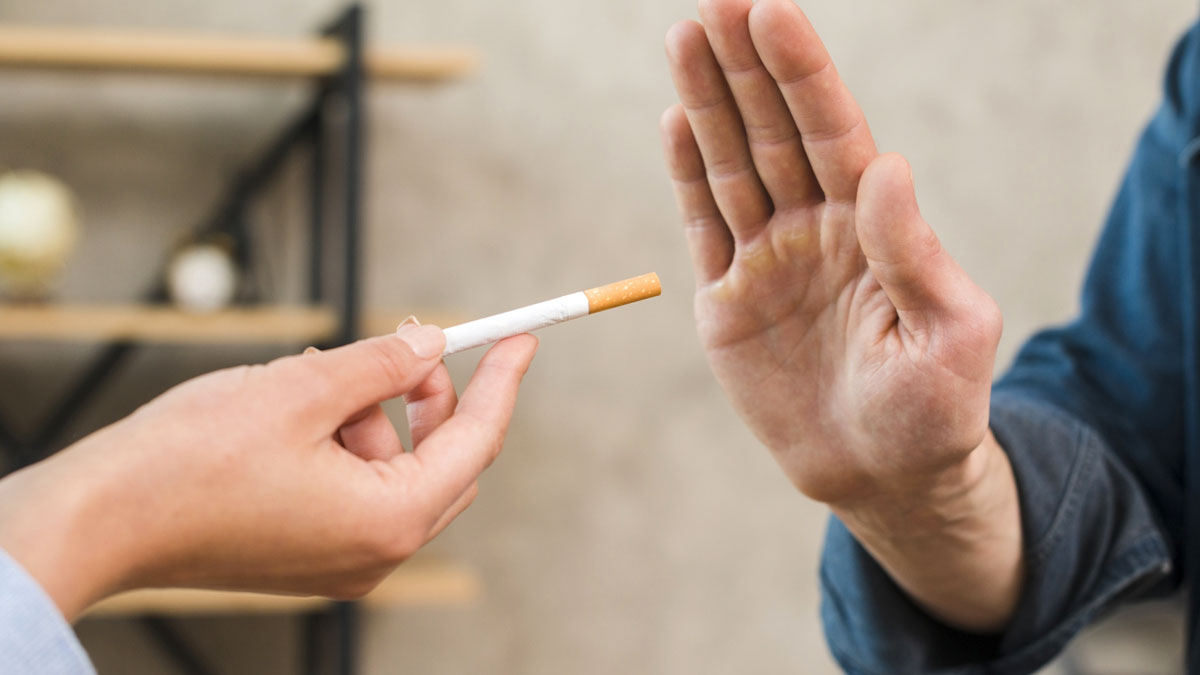
Quitting Smoking Can Improve Cholesterol and Heart Health
The good news is that the harmful effects of smoking on cholesterol begin to improve after quitting. Research published in Springer Nature shows that smoking cessation can:
- Increase HDL cholesterol
- Reduce oxidative stress
- Improve blood vessel function
- Lower inflammation
 4-smoke
Why Smoking and High Cholesterol Together Are Especially Dangerous
Smoking and high cholesterol are a particularly dangerous combination because they damage the cardiovascular system in overlapping ways. As mentioned above, high cholesterol contributes to plaque buildup, while smoking damages artery walls, speeds plaque growth, raises clot risk, and reduces oxygen supply. Together, they greatly increase the risk of heart attack, stroke, and artery blockage.
Dr Bhat warns, “When smoking and high cholesterol coexist, artery damage progresses much faster, making cardiovascular events far more likely. This combination often requires aggressive lifestyle intervention.”
Bottomline
Smoking affects cholesterol levels by lowering protective HDL cholesterol, raising triglycerides, increasing LDL oxidation, damaging artery walls, and accelerating plaque buildup. These changes significantly increase the risk of atherosclerosis, heart attack, and stroke, even when cholesterol numbers do not seem severely abnormal.
According to experts, smoking makes cholesterol far more harmful to blood vessels. That is why cardiovascular risk rises even when cholesterol levels appear only mildly abnormal. Stopping smoking is a big step towards a healthier heart. It can help improve the good cholesterol in the blood, reduce inflammation, and lower the risk of heart disease over time. For anyone concerned about cholesterol and cardiovascular health, stopping smoking is one of the most important steps toward protecting the heart.
FAQ
1. Does smoking raise cholesterol levels?
Smoking may not significantly raise total cholesterol, but it lowers HDL cholesterol, raises triglycerides, and makes LDL more harmful.2. How does smoking affect HDL cholesterol?
Smoking lowers HDL cholesterol, reducing the body’s ability to remove excess cholesterol from the bloodstream.3. Can smoking cause high LDL cholesterol?
Smoking may not significantly increase LDL levels, but it oxidises LDL particles, making them more damaging to the arteries.4. Will cholesterol improve after quitting smoking?
Yes. HDL levels often improve after quitting, and blood vessel inflammation decreases, lowering cardiovascular risk.5. Why is smoking harmful even with normal cholesterol?
Smoking damages artery walls and changes how cholesterol behaves, increasing cardiovascular risk even when cholesterol numbers appear normal.
All possible measures have been taken to ensure accuracy, reliability, timeliness and authenticity of the information; however Onlymyhealth.com does not take any liability for the same. Using any information provided by the website is solely at the viewers’ discretion. In case of any medical exigencies/ persistent health issues, we advise you to seek a qualified medical practitioner before putting to use any advice/tips given by our team or any third party in form of answers/comments on the above mentioned website.
How we keep this article up to date:
We work with experts and keep a close eye on the latest in health and wellness. Whenever there is a new research or helpful information, we update our articles with accurate and useful advice.
-
Current Version
Apr 22, 2026 18:50 IST
Modified By : Tanya Srivastava Apr 22, 2026 18:50 IST
Modified By : Tanya SrivastavaApr 22, 2026 18:50 IST
Published By : Tanya Srivastava
Reviewed By : Dr Sanjay Bhat