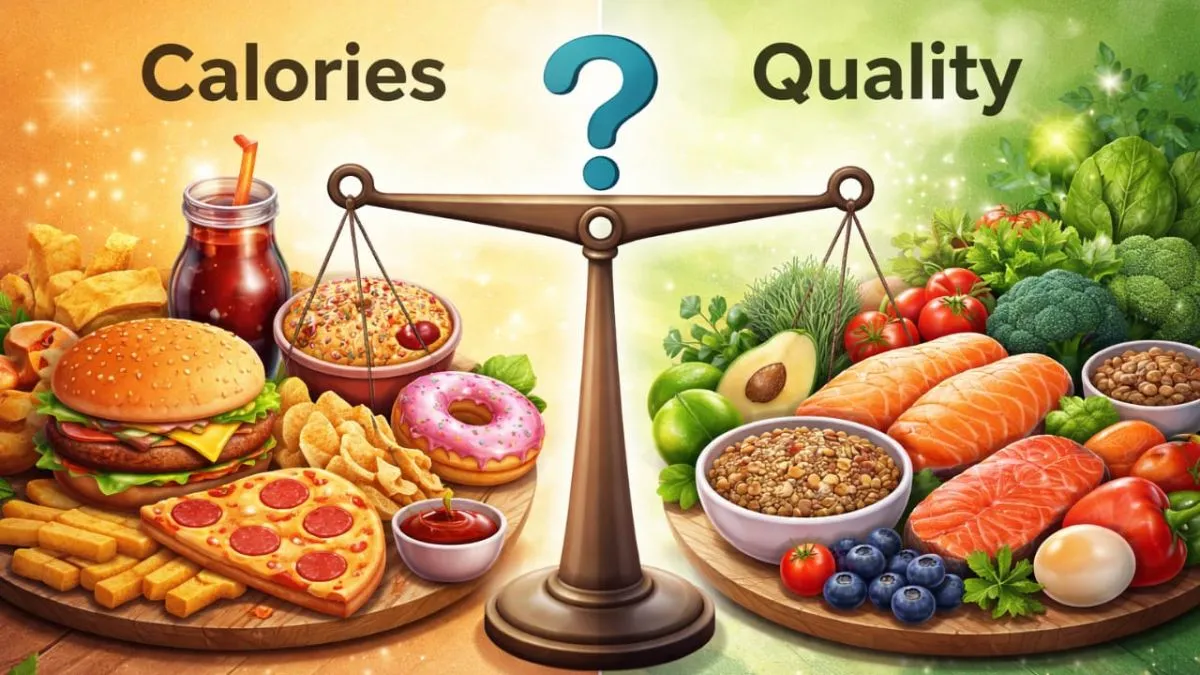
These days, when we talk about diet, the one term that we hear incessantly is ‘Calories’. With infinite food and nutrition influencers sharing their wisdom online, we often end up overwhelmed with the information. The generational gap can be seen here too as young kids are obsessed with calories, whereas the adults emphasise on good-quality food. This tug-of-war seems to have no end, but what’s more important is the right information.
To end this calorie vs quality debate, we reached out to Dr Archana Batra, Dietitian and Certified Diabetes Educator, who explained what is more harmful- calorie overload or poor quality food.
Calorie Vs Quality: What Is More Important
For years, calories have dominated conversations around health, weight, and nutrition. Food labels, fitness apps, and even restaurant menus focus heavily on numbers, how many calories are being consumed and burned. However, emerging research and real-world health patterns suggest that food quality may play a far more decisive role in long-term health than calorie count alone.
Why Is Calorie Count Important?
According to Dr Batra, “Calories are a measure of energy, not nutrition. Two foods with the same calorific value can have dramatically different effects on the body. For instance, 300 calories from a sugary beverage and 300 calories from a balanced meal of whole grains, vegetables, and protein are metabolised very differently. While both provide energy, their impact on blood sugar, hormones, inflammation, and satiety varies widely.”
Also Read: 7 Smart Snack Swaps to Keep You Energised at Your Desk
Why Is Good Quality Food Important Too?
You must have heard the famous saying- “You Are What You Eat.”
The quality of your meal is the ultimate parameter that defines your health and wellness. Eating healthy and clean keeps the body clean from the inside. Here are some reasons why quality food matters:
- Low-quality, ultra-processed foods tend to be high in refined sugars, unhealthy fats, sodium, and additives.
- They are low in fibre, vitamins, minerals, and antioxidants.
- Studies show regular consumption of such foods has been strongly linked to obesity, type 2 diabetes, cardiovascular disease, gut disorders, and chronic inflammation, even when total calorie intake is not excessive.
- These foods are designed to be hyper-palatable, often leading to overeating because they fail to trigger fullness signals effectively.
Importance of the quality of the food
Unlike poorly made and processed foods, high-quality foods, such as fruits, vegetables, whole grains, legumes, nuts, seeds, and minimally processed proteins, support metabolic health even when calorie intake is slightly higher.
These foods provide fibre that slows digestion, stabilises blood sugar, and improves gut health.
They also contain micronutrients and bioactive compounds that regulate immune function, reduce oxidative stress, and support hormonal balance.
Also Read: Rice vs Bread: Which is better during weight loss?
Calories Vs Quality
Take a look at this Comparison Table:
Feature |
High-Quality Foods |
Low-Quality Foods (Ultra-Processed) |
| Primary Focus | Nutrient Density: High in fiber, vitamins, and antioxidants. | Energy Density: High in refined sugars, sodium, and additives. |
| Blood Sugar Impact | Stable: Fiber slows glucose absorption, preventing spikes. | Volatile: Rapid spikes and crashes in glucose and insulin. |
| Satiety & Hunger | High: Effectively triggers fullness hormones (like PYY and GLP-1). | Low: Designed to be "hyper-palatable," leading to overeating. |
| Hormonal Response | Regulated: Supports balance in immune and metabolic hormones. | Disrupted: Promotes chronic inflammation and insulin resistance. |
| Metabolic Efficiency | Efficient: Energy is used for cellular repair and metabolic function. | Inefficient: Excess energy is more easily stored as visceral fat. |
| Weight Management | Natural Regulation: Calorie balance often happens automatically. | Constant Battle: Requires willpower to override lack of satiety. |
| Long-Term Risk | Protective: Lowers risk of heart disease and type 2 diabetes. | Harmful: Linked to obesity and gut disorders, even in "normal" ranges. |
Dietitian’s Verdict
“Focusing solely on calories can also lead to unhealthy eating behaviours. Extreme calorie restriction without regard for nutrient quality may result in deficiencies, muscle loss, fatigue, poor immunity, and hormonal disruptions. In contrast, nutrient-dense diets often promote natural appetite regulation, making it easier to maintain a healthy weight without constant calorie tracking,” says Dr Batra.
“That said, calories still matter to an extent. Chronic overconsumption, even of healthy foods, can lead to weight gain. However, calorie excess from whole foods is far less common because such foods are filling and harder to overeat. The body processes these calories more efficiently, using them for repair, energy, and metabolic functions rather than storing them as fat,” she adds.
Final Word
Ultimately, poor food quality harms health more than calorie count alone. A diet centred on low-quality foods can disrupt metabolism, increase disease risk, and impair overall well-being, even within ‘acceptable’ calorie limits. Prioritising food quality first and calories second is a more sustainable and health-protective approach.
NOTE- The mai image is AI-generated.
All possible measures have been taken to ensure accuracy, reliability, timeliness and authenticity of the information; however Onlymyhealth.com does not take any liability for the same. Using any information provided by the website is solely at the viewers’ discretion. In case of any medical exigencies/ persistent health issues, we advise you to seek a qualified medical practitioner before putting to use any advice/tips given by our team or any third party in form of answers/comments on the above mentioned website.
How we keep this article up to date:
We work with experts and keep a close eye on the latest in health and wellness. Whenever there is a new research or helpful information, we update our articles with accurate and useful advice.
-
Current Version
Feb 18, 2026 14:38 IST
Modified By : Chanchal Sengar Feb 18, 2026 14:38 IST
Modified By : Chanchal SengarFeb 18, 2026 14:38 IST
Modified By : Chanchal SengarFeb 18, 2026 14:38 IST
Published By : Chanchal Sengar
Reviewed By : Dr Archana Batra