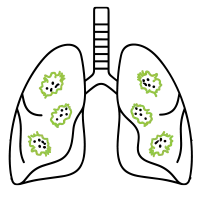
Lung cancer is one of the leading causes of cancer-related deaths worldwide. Despite growing awareness about the dangers of smoking, the disease continues to affect millions of people, including those who have never smoked. Persistent coughing, breathlessness, chest pain and unexplained weight loss are some of the warning signs that should not be ignored. However, lung cancer often develops without noticeable symptoms in its early stages, making timely diagnosis challenging.
While smoking remains the biggest risk factor, exposure to air pollution, second-hand smoke, occupational chemicals and certain environmental pollutants can also increase the risk. In India, where tobacco use, deteriorating air quality and occupational exposure are important public health concerns, understanding lung cancer is particularly important.
According to the World Health Organization (WHO), approximately 2.5 million new lung cancer cases and 1.8 million deaths were reported globally in 2022, making it the leading cause of cancer-related deaths. Early detection, appropriate treatment and reducing exposure to risk factors can help improve outcomes.
What Is Lung Cancer?
Lung cancer is a disease in which abnormal cells in the lungs grow uncontrollably and form a tumour. Normally, cells grow and divide in an organised manner. However, when changes occur in their DNA, they may begin multiplying abnormally and escape the body's usual growth controls.
The cancer usually begins in the cells lining the airways or other parts of the lungs. As it progresses, it can invade surrounding tissues and spread to nearby lymph nodes or distant organs, including the brain, bones, liver and adrenal glands.
Lung cancer can affect anyone, irrespective of age, gender or smoking history. Although the risk is considerably higher among smokers, non-smokers can also develop the disease.
What Are The Different Types Of Lung Cancer?
According to the American Lung Association, lung cancer is broadly divided into two main types based on how cancer cells appear under a microscope.
Non-small cell lung cancer (NSCLC)
This is the most common type, accounting for approximately 85% of lung cancer cases. It generally grows and spreads more slowly than small cell lung cancer, although its behaviour varies depending on the subtype.
The main subtypes include:
- Adenocarcinoma: Usually develops in the outer parts of the lungs and is the most common type of lung cancer among non-smokers. It can also occur in people who smoke.
- Squamous cell carcinoma: Usually develops in the cells lining the airways and is strongly associated with smoking.
- Large cell carcinoma: A less common type that can develop in different parts of the lungs and may grow and spread rapidly.
Small cell lung cancer (SCLC)
This type accounts for approximately 10-15% of lung cancer cases. It is strongly associated with smoking and is generally more aggressive than non-small cell lung cancer.
Small cell lung cancer tends to grow quickly and spread to other parts of the body early. It is often diagnosed at an advanced stage.
What Causes Lung Cancer?
Lung cancer develops when genetic changes cause lung cells to grow uncontrollably. Several environmental, lifestyle and biological factors can contribute to these changes.
The major risk factors include:
Smoking
Tobacco smoking is the biggest risk factor for lung cancer. Cigarettes contain thousands of chemicals, including several known carcinogens that can damage the DNA of lung cells.
The risk increases with the number of cigarettes smoked daily and the number of years a person has smoked. Smoking bidis, cigars and pipes also increases the risk. The longer the exposure, the greater the potential damage.
Second-hand smoke
Breathing in smoke released by cigarettes or exhaled by smokers can expose non-smokers to cancer-causing chemicals. People living with smokers or regularly exposed to tobacco smoke at workplaces may face an increased risk of lung cancer.
Air pollution
According to a report published in the journal 'Science of The Total Environment', long-term exposure to outdoor air pollution, particularly fine particulate matter (PM2.5), is associated with an increased risk of lung cancer.
Air pollution contains harmful particles and chemicals that can enter the respiratory system and contribute to inflammation and cellular damage.
Occupational exposure
People working in certain industries may be exposed to substances that increase lung cancer risk. These include asbestos, silica dust, diesel exhaust, arsenic, chromium and certain industrial chemicals.
Workers in construction, mining, manufacturing and other industries with inadequate protective measures may be particularly vulnerable.
Indoor air pollution
Prolonged exposure to smoke from burning wood, coal, dung cakes and other solid fuels used for cooking or heating can increase lung cancer risk, particularly in poorly ventilated homes.
Family history and genetic factors
Having a close family member with lung cancer may increase an individual's risk. Certain inherited genetic variations may also influence susceptibility.
Previous lung diseases
Some chronic lung conditions and a history of certain lung injuries may be associated with an increased risk. However, having a respiratory disease does not mean a person will necessarily develop lung cancer.
It is important to remember that lung cancer can develop without any identifiable risk factor.
What Are The Early Warning Signs And Symptoms Of Lung Cancer?
One of the biggest challenges with lung cancer is that it may not cause noticeable symptoms during its early stages. Some people discover the disease accidentally during imaging tests performed for another health condition. As the cancer grows, symptoms may become more apparent. These include:
- Persistent cough: A cough that does not go away, keeps getting worse or changes in its usual pattern.
- Coughing up blood: Blood in the sputum, even in small amounts, needs medical evaluation.
- Chest pain: Persistent pain or discomfort in the chest, particularly when coughing, breathing deeply or laughing.
- Breathlessness: Difficulty breathing or getting breathless during activities that were previously comfortable.
- Wheezing: A whistling sound while breathing, which may occur when airways become narrowed.
- Hoarseness: Persistent changes in the voice due to irritation or pressure on nerves around the voice box.
- Unexplained weight loss: Losing weight without making changes to your diet or physical activity.
- Persistent fatigue: Feeling unusually tired or weak without an obvious reason.
- Repeated respiratory infections: Recurrent pneumonia or chest infections that do not resolve completely may need further investigation.
Can Lung Cancer Cause Symptoms Outside The Lungs?
Yes, when lung cancer spreads to other parts of the body, it can produce additional symptoms depending on the affected organ.
These may include:
- Bone pain: Persistent pain in the back, ribs or other bones if cancer spreads to the bones.
- Headaches and seizures: These may occur if cancer spreads to the brain.
- Swelling of the face and neck: This can happen when a tumour presses on major blood vessels.
- Loss of balance or weakness: Neurological symptoms may develop if the brain or nervous system is affected.
Some people may also develop finger clubbing, in which the fingertips become enlarged and the nails curve more than usual.
These symptoms do not automatically indicate lung cancer. Respiratory infections, asthma, tuberculosis and other conditions can cause similar problems. However, persistent or unexplained symptoms should never be ignored.
How Is Lung Cancer Diagnosed?
Diagnosing lung cancer involves identifying an abnormal growth, confirming whether it is cancerous and determining how far the disease has spread.
Doctors may recommend the following tests:
- Chest X-ray: This is often one of the initial investigations when lung cancer is suspected. It can help identify an abnormal mass or changes in the lungs, although smaller tumours may not be visible.
- CT scan: A computed tomography (CT) scan provides detailed images of the lungs and surrounding structures. It helps identify the location, size and appearance of suspicious growths.
- PET-CT scan: A positron emission tomography (PET) scan combined with CT helps identify areas of increased metabolic activity and assess whether cancer may have spread to other parts of the body.
- Bronchoscopy: In this procedure, a doctor inserts a thin, flexible tube with a camera through the nose or mouth into the airways to examine the lungs and collect tissue samples.
- Biopsy: A biopsy involves collecting a small sample of suspicious tissue for examination under a microscope. It is generally needed to confirm the diagnosis and identify the type of cancer.
- Molecular testing: Once cancer is confirmed, doctors may recommend testing tumour tissue for specific genetic changes or biomarkers. These results can help determine whether targeted therapy or immunotherapy may be suitable.
NOTE: Blood tests and lung function tests may also be advised to assess overall health and determine whether a patient can safely undergo particular treatments.
What Are The Different Stages Of Lung Cancer?
Staging helps doctors understand the size of the tumour, whether it has spread and which treatment approach may be appropriate.
According to the Lung Cancer Research Foundation, non-small cell lung cancer is generally classified into four main stages:
- Stage 1: Cancer is limited to the lung and has not spread to nearby lymph nodes.
- Stage 2: The tumour may be larger or may have spread to nearby lymph nodes or structures.
- Stage 3: Cancer has spread to lymph nodes in the chest or nearby structures. It is further divided into stage 3A, 3B and 3C.
- Stage 4: Cancer has spread to distant organs or other parts of the body. This is also known as metastatic lung cancer.
Small cell lung cancer is commonly classified into two categories:
- Limited-stage disease: Cancer is confined to one side of the chest and can generally be treated within a single radiation area.
- Extensive-stage disease: Cancer has spread beyond the limited area, including to distant organs.
The stage of cancer plays an important role in determining treatment options and understanding the likely course of the disease.
How Is Lung Cancer Treated?
Treatment depends on several factors, including the type of cancer, its stage, genetic characteristics, the patient's overall health and their ability to tolerate treatment.
A multidisciplinary team of oncologists, surgeons, radiologists and other specialists usually helps plan treatment.
The main treatment options include:
- Surgery: Surgery may be recommended for selected patients with early-stage lung cancer, particularly non-small cell lung cancer. Depending on the tumour's location and size, doctors may remove a small section of the lung, a lobe or, in some cases, an entire lung.
- Chemotherapy: Chemotherapy uses medicines to destroy cancer cells or stop them from multiplying. It may be used before surgery to shrink a tumour, after surgery to reduce the risk of recurrence or as the main treatment for advanced disease.
- Radiation therapy: Radiation therapy uses high-energy radiation to destroy cancer cells. It may be used alone or alongside chemotherapy, depending on the stage and type of cancer.
- Targeted therapy: Targeted therapy works against specific genetic changes or proteins that help cancer cells grow. It is prescribed when appropriate molecular tests identify a target that can be treated with available medicines.
- Immunotherapy: Immunotherapy helps the body's immune system recognise and fight cancer cells. It may be recommended alone or in combination with chemotherapy, depending on the cancer type and biomarker results.
NOTE: Not every patient requires all these treatments. The treatment plan is individualised according to clinical findings and the patient's preferences.
Can Lung Cancer Be Prevented?
Although lung cancer cannot always be prevented, certain lifestyle changes and precautions can significantly reduce the risk.
Some important preventive measures include:
- Avoid tobacco: Not smoking is the most effective way to reduce lung cancer risk. People who smoke should seek professional help to quit.
- Stay away from second-hand smoke: Avoid environments where people smoke and maintain smoke-free homes and workplaces.
- Reduce exposure to air pollution: Check local air quality levels and limit prolonged outdoor activities when pollution is severe. Use appropriate respiratory protection when exposure cannot be avoided.
- Follow workplace safety measures: People working around asbestos, silica, industrial chemicals and other harmful substances should use recommended protective equipment.
- Improve indoor ventilation: Ensure proper ventilation while cooking, particularly when using solid fuels.
- Maintain a healthy lifestyle: Eat a balanced diet, remain physically active and maintain a healthy body weight. These measures support overall health, although they cannot guarantee protection against lung cancer.
Importantly, quitting smoking is beneficial at any age. Even people who have smoked for several decades can reduce their future risk by stopping.
Who Should Get Screened For Lung Cancer?
Lung cancer screening involves testing people who do not have symptoms but may be at a higher risk of developing the disease.
Low-dose computed tomography (LDCT) is the recommended screening method for eligible high-risk individuals. A 2026 study published in the Journal of the American Medical Association shows that LDCT uses a lower radiation dose than a standard chest CT scan and can detect small lung abnormalities before symptoms develop.
However, screening is not recommended for everyone. Eligibility generally depends on age, smoking history, current smoking status and other risk factors. For example, international guidelines recommend annual LDCT screening for certain adults aged 50-80 years with a significant smoking history.
In India, screening should be discussed with a doctor, as routine population-wide lung cancer screening is not established. A specialist can assess individual risk and determine whether screening is appropriate.
A chest X-ray should not be considered a substitute for LDCT screening in eligible high-risk individuals. Also, screening is different from diagnostic testing: people experiencing persistent symptoms need medical evaluation rather than waiting for a screening appointment.
What Is The Survival Rate Of Lung Cancer?
The chances of surviving lung cancer depend on several factors, including the cancer type, stage at diagnosis, genetic characteristics, overall health and response to treatment.
Generally, lung cancer detected at an early stage has better treatment outcomes than cancer diagnosed after it has spread to distant organs.
Advances in targeted therapies, immunotherapy, radiation techniques and surgical procedures have also improved treatment options for many patients.
However, survival statistics are based on groups of people and cannot predict an individual patient's outcome. It is best to discuss prognosis with the treating oncologist, who can consider the specific diagnosis and treatment response.
When To See a Doctor?
Do not ignore a cough that persists for several weeks, unexplained weight loss, recurring chest infections, ongoing chest discomfort or unexplained breathlessness.
Coughing up blood, even in small amounts, requires prompt medical assessment. Severe breathlessness, significant bleeding or sudden chest pain requires emergency medical attention.
People with a history of smoking, occupational exposure or other risk factors should be particularly attentive to changes in their respiratory health.