
Coconut oil is well-recognised in wellness communities and criticised by cardiologists for years, making it one of the most divisive dietary fats. While some people think it is good at preventing heart disease, improving metabolism, and being a healthier saturated fat, others believe it raises Low-Density Lipoprotein (LDL or bad) cholesterol and predisposes people to cardiovascular disease.
Scientific evidence indicates coconut oil raises LDL (bad) cholesterol, raises High-Density Lipoprotein (HDL or good) cholesterol, and performs worse for heart health than unsaturated fats, such as olive, mustard, peanut, or canola oil. For the same reason, major heart associations do not recommend coconut oil as a primary cooking fat for cardiovascular health.
However, the correlation between coconut oil and heart disease is more complex. Our expert, Dr Utagi, explains that it is influenced by several factors such as fatty acid type, the form of coconut oil used, individual dietary patterns, and metabolic health. Read ahead to have your answers to make an informed choice.
What Exactly Is Coconut Oil?
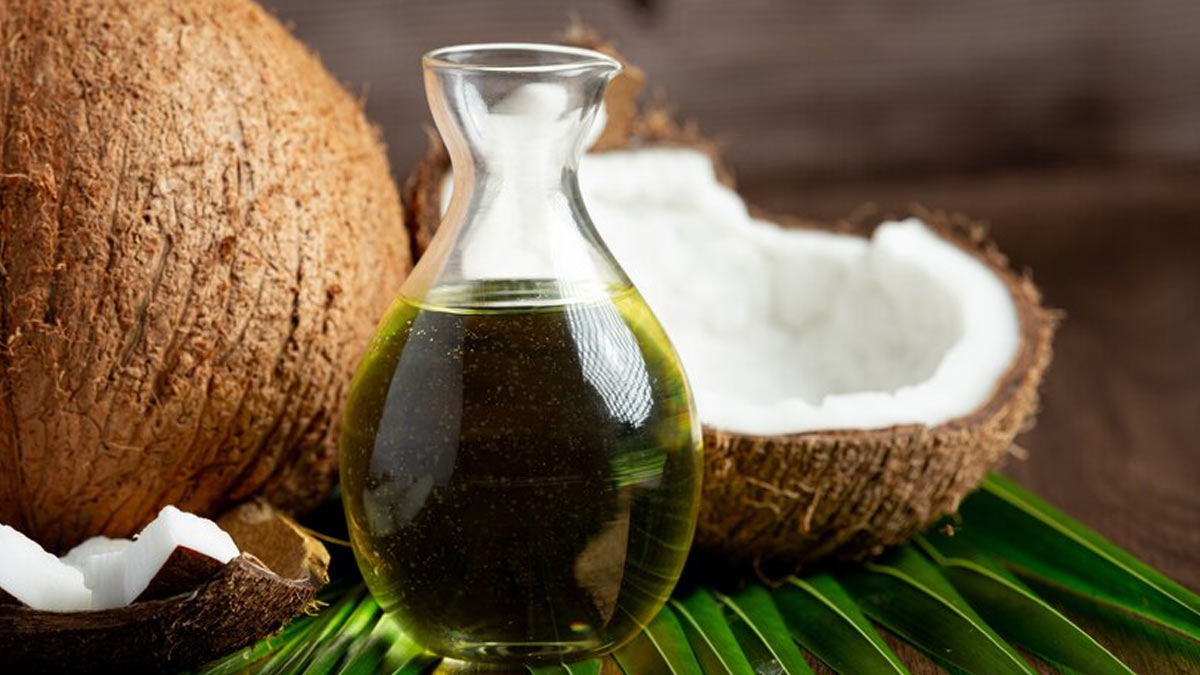
Coconut oil is extracted from mature coconut flesh and contains about 82-90% saturated fat, which is one of the highest of any commonly used oil.
 3-coco
Types of Coconut Oil
Type |
Description |
Heart-Health Consideration |
Virgin Coconut Oil (VCO) |
Extracted from fresh coconut, unrefined, contains polyphenols |
Slightly better antioxidant profile |
Refined Coconut Oil (RCO) |
Processed from dried coconut (copra), deodorised |
Fewer antioxidants, similar LDL impact |
Fractionated Coconut Oil / MCT Oil |
Contains isolated medium-chain triglycerides |
Not the same as coconut oil; metabolically different |
One of the most common misconceptions is that coconut oil is predominantly MCTs. WebMD defines MCT (Medium-Chain Triglyceride) as a type of easily digestible dietary fat that the body rapidly absorbs and converts into a quick source of energy. In reality, only about 14% of coconut oil is true MCTs like caprylic and capric acids.
The majority, about 47%, is lauric acid, which behaves more like a long-chain saturated fat in the body.
ALSO READ- How Smoking Damages Your Heart
How Coconut Oil Affects Cholesterol Levels
Here are a few ways Dr Utagi explains how coconut oil affects our cholesterol levels:
1. Coconut Oil Raises LDL (Bad) Cholesterol
One of the most consistent findings across decades of trials is that coconut oil raises LDL levels. A 2020 meta-analysis of 16 clinical trials found that coconut oil increased LDL cholesterol by around 10 mg/dL compared to olive oil and other plant oils. The review published in the journal Circulation confirmed that coconut oil consistently raises LDL more than unsaturated fats.
-Why does it increase LDL?
Lauric acid (a type of saturated fat most commonly found in coconut oil and palm oil) stops the liver from clearing out bad cholesterol efficiently. That leftover cholesterol builds up in the arteries like gunk in a plumbing pipe, which is dangerous for the heart and increases the cardiovascular risk.
 1-coco
2. Coconut Oil Raises HDL (Good) Cholesterol
In preventive cardiology, the primary target for reducing cardiovascular risk remains firmly on lowering LDL cholesterol. This is because the HDL increase caused by coconut oil does not neutralise or compensate for the accompanying, dangerous surge in LDL. Dr Utagi shared that neither he nor major heart associations consider coconut oil to be a heart-protective fat.
3. Coconut Oil Worsens LDL-HDL Ratio
This ratio is a stronger predictor of heart disease than standalone numbers.
The American Heart Association shows that coconut oil raises LDL more than it improves HDL
Its LDL-to-HDL ratio is worse than that of unsaturated oils. As per a journal published in BMJ Open, it performs similarly or slightly worse than butter and ghee.
Coconut vs. Other Cooking Oils Comparison Table
Oil Type |
LDL Effect |
HDL Effect |
Heart-Health Rating |
Coconut oil |
Raises |
Raises |
Neutral-to-negative |
Olive oil (EVOO) |
Lowers |
Neutral/slight |
Excellent |
Mustard oil |
Lowers |
Neutral |
Excellent |
Peanut/Groundnut oil |
Lowers |
Neutral |
Very Good |
Rapeseed oil |
Lowers |
Neutral/slight |
Very Good |
Ghee |
Raises |
Raises |
Mixed |
Butter |
Raises |
Neutral |
Poor |
According to Dr Utagi, “Unsaturated fats remain the gold standard for heart health.”
Does Virgin Coconut Oil Have Any Cardiovascular Benefits?
Virgin Coconut Oil (VCO) has a slightly better antioxidant profile due to polyphenols. Polyphenols are naturally occurring, antioxidant-rich plant compounds that protect the body against cellular damage and promote overall health.
According to a 2025 study, published in Diabetology & Metabolic Syndrome, BMC, VCO lowered inflammatory markers but still increased LDL. Dr Utagi notes, “Benefits seen in rat studies (antioxidant effects) have not translated strongly in human metabolic studies.”
In simpler terms, this means that VCO may be marginally better than refined versions, but not enough to be considered heart-protective.
ALSO READ- Coffee and Heart Health: How Many Cups Are Safe Per Day?
Impact of Coconut Oil and Blood Pressure/Sugar/Inflammation
Blood Pressure: Evidence is inconsistent. Marginal improvements are observed in small studies, but not in large studies.
Endothelial Function (blood vessel health): VCO shows potential antioxidant properties but is overshadowed by its LDL-raising effect.
Insulin Sensitivity: None of the significant improvements has been reported in humans.
What Major Heart Organisations Say (2026 Updated)
The American Heart Association (2020 Published Advisory) advises against excessive consumption of coconut oil since it increases LDL cholesterol.
Guidelines of the World Health Organization (WHO, 2023) recommend a low intake of saturated fats, such as coconut oil, to less than 10 per cent of total daily calories.
Cleveland Clinic (2022 Advisory) states coconut oil is not a heart-healthy oil and is supposed to be used in moderation.
Indian Journal of Community Medicine (India, 2025 Guidelines) advocates changing the oils and not using one saturated fat source.
 2-coco
Who Should Limit Coconut Oil?
Dr Utagi recommends that certain groups limit or restrict the consumption of coconut oil. These include:
- Patients with elevated LDL cholesterol
- Individuals having a family history of cardiovascular disease
- Those with diabetes, hypertension, or metabolic syndrome
- People are already advised to follow a heart-healthy diet
- Anybody who eats mostly saturated fats such as ghee, butter, etc.
How Much Coconut Oil Is Safe?
Based on Nutrition Review consensus, consuming coconut oil is generally safe when:
- The normal range is one to two teaspoons daily amongst healthy adults
- It is not used as the primary cooking oil
- It is combined with high-fruit, vegetable, whole-grain, pulse, nut and omega-3 diets
ALSO READ- Stress Test for Heart: Why It's Done and What It Reveals
How to Use Coconut Oil Safely in a Practical Way
Here are some expert-approved ways to incorporate coconut oil into your diet safely:
- Use coconut oil where its flavour is essential, such as South Indian or Thai dishes
- Prefer virgin coconut oil
- For daily cooking, rely on heart-healthy oils
- Rotate among oils like olive, mustard, groundnut and add a touch of coconut oil
- Do not deep-fry with coconut oil very often
Is Coconut Oil Bad for Your Heart? (Expert Summary)
Yes, coconut oil is not ideal for heart health if used as the primary fat, due to its LDL-raising effect. However, if used occasionally in small amounts within an overall heart-healthy diet, it is alright. Dr Utagi concludes, “Coconut oil is neither a superfood nor a villain. Its effect depends on quantity, diet quality, and metabolic health.”
Bottomline
Coconut oil is not recommended as a primary cooking oil for heart health as it increases LDL cholesterol, and its potential antioxidant benefits do not outweigh this effect. While there is no harm in using it occasionally, particularly virgin coconut oil, experts warn that overconsumption can do more harm than good. Unsaturated oils are the most appropriate to use in promoting a healthy heart.
FAQ
1. Is coconut oil heart-healthy?
No, because coconut oil raises LDL and is not considered heart-healthy compared to unsaturated oils.2. Is virgin coconut oil better than refined?
Yes, to some extent, but both of them raise LDL cholesterol.3. Does coconut oil clog arteries?
There’s no direct evidence, but increased LDL can lead to plaque buildup.4. Should people with high cholesterol avoid coconut oil?
Yes, experts recommend limiting it to very small amounts or avoiding it altogether.5. Is coconut oil better than ghee or butter?
Partially yes, but still worse than plant-based unsaturated oils.
All possible measures have been taken to ensure accuracy, reliability, timeliness and authenticity of the information; however Onlymyhealth.com does not take any liability for the same. Using any information provided by the website is solely at the viewers’ discretion. In case of any medical exigencies/ persistent health issues, we advise you to seek a qualified medical practitioner before putting to use any advice/tips given by our team or any third party in form of answers/comments on the above mentioned website.
How we keep this article up to date:
We work with experts and keep a close eye on the latest in health and wellness. Whenever there is a new research or helpful information, we update our articles with accurate and useful advice.
-
Current Version
Apr 07, 2026 19:09 IST
Modified By : Tanya Srivastava Apr 07, 2026 19:09 IST
Modified By : Tanya SrivastavaApr 07, 2026 19:09 IST
Modified By : Tanya SrivastavaApr 07, 2026 19:09 IST
Modified By : Tanya SrivastavaApr 07, 2026 19:09 IST
Published By : Tanya Srivastava
Reviewed By : Dr Basavaraj Utagi