

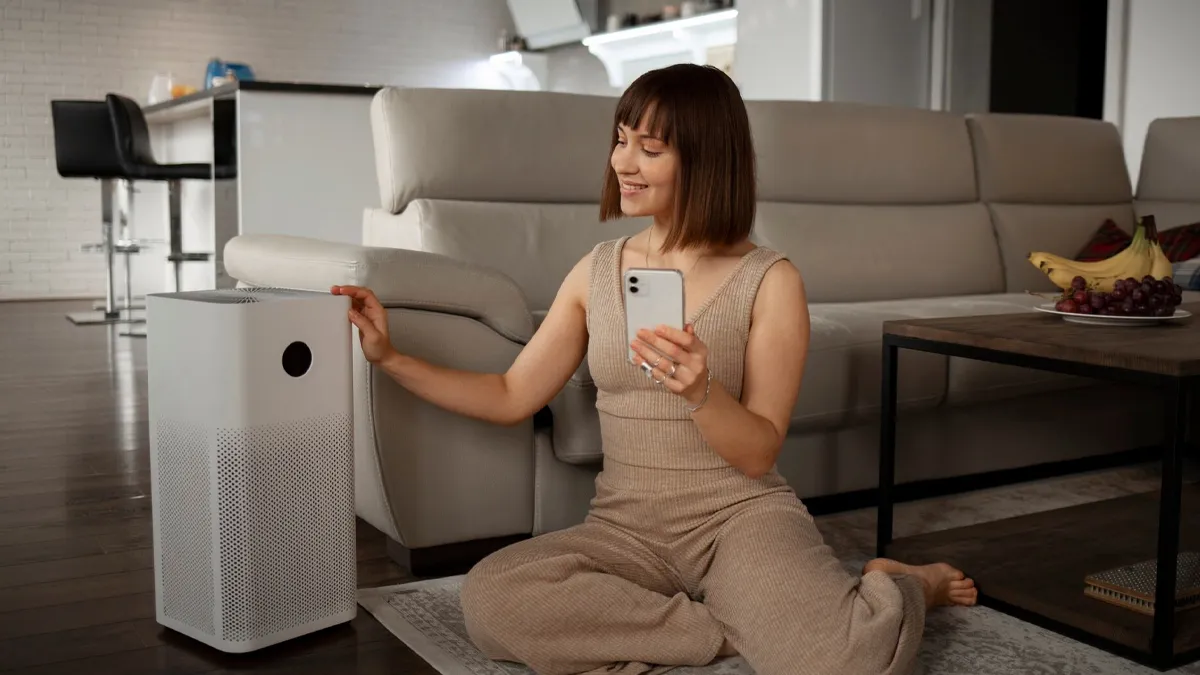
The air quality of cities like Delhi and Mumbai are in no mood to improve it seems. In such a scenario, many are opting to buy air purifiers for home – to protect their health. But buying an air purifier is not a cake walk, as one needs to be aware of several factors. So how to select the right air purifier? Today, we will tell you all about it.
Table of Content:-
To get a better understanding, we reached out to Dr Suchismitha Rajamanya, Lead Consultant & HOD - Internal Medicine, Aster Whitefield Hospital.
Factors To Consider While Buying An Air Purifier
Choosing the right air purifier for your home can be a tricky task. To be make it easier for you, our expert lists down factors to take note of while buying it:
- Selection of an air purifier is mainly based on the size of the room, the type of pollutants that you want to eliminate, and the filtration technology of the device.
- The square footage of a room that a purifier can cover should be equal to or greater than that of the room where the air circulation is to be carried out.
- People residing in cities that are highly polluted ought to consider buying devices that are meant for PM2.5 and PM10 filtration.
- On the other hand, the families that have pets may seek models that can remove dander and odors.
- The ones with asthma or allergic conditions require medical-grade filtration, which is efficient and can be proven.
- Noise level, energy consumption, maintenance cost, filter replacement interval, smart features such as air quality sensors and an automatic mode – all these can also influence the overall user experience.
Also Read: Do Air Purifiers Have Side Effects? Expert Decodes
What Is CADR In Air Purifiers And Why It Matters?
You must have heard about CADR, when it comes to air purifiers. Let us explain what they are and why it is important.
“CADR (Clean Air Delivery Rate) is a metric accepted by the industry, which shows the time an air purifier needs to filter out the typical pollutants such as dust, pollen, and smoke that are present in an environment. The higher the CADR, the faster and more efficient the purification will be,” answers Dr Rajamanya.
She adds, “Because the pollution level inside a house may vary during the day, it is very important to choose a purifier of CADR that is suitable for the size of the room. The value of the CADR should at least be two-thirds of the room's area in square feet. CADR essentially plays the role of the performance standard upon which prospective buyers can base their decisions rather than relying on the manufacturer's claims.”
Why HEPA Rating In Air Purifiers Are Important
The term ‘HEPA’ must have cropped up on your social media reels, which speaks about air purifiers. Today, we will tell you what it is.
“HEPA (High-Efficiency Particulate Air) filters are capable of trapping particles that are as tiny as three-tenths of a micrometer. The particles can be dust, allergens, smoke, mold spores, and some bacteria. Genuine HEPA filters are different from ‘HEPA-like’ or ‘HEPA-type’ as the latter may not reach the same standard. Usually, a certified HEPA H13 or H14 filter is advised for people with asthma, allergies, respiratory illnesses, or those living in heavily polluted areas. The HEPA rating is important because it is the direct measure of how the air purifier can capture the tiniest pollutants which are the main causes of health symptoms,” explains Dr Rajamanya.
Health Benefits Of Air Purifiers
On this note, Dr Rajamanya shares the benefits of purifiers:
- Air purifiers are helpful in improving indoor air quality since they filter out fine particles, allergens, and substances that induce allergic and inflammatory reactions in the body. Symptoms like cough, sneezing, nasal congestion, and watery eyes are among the symptoms that the air purifiers can effectively tackle.
- For asthmatics, the use of purer air can immensely contribute to decreasing the time between asthma attacks.
- An air purifier that removes dust mites, pet dander, mold spores, and smoke provides easier breathing and good sleep quality.
- Exposure to PM2.5 over a longer period of time is one of the causes of heart disease, stroke, and chronic lung conditions.
- Regular use of purifiers in contaminated environments may alleviate long-term health risks.
Are There Any Risks Of Using An Air Purifier?
But do air purifiers have any cones? “Most of the air purifiers do not pose a threat to safety, yet, there are certain considerations. One should be cautious of ozone-producing purifiers (usually some ionizers or UV-based devices) because the ozone produced can harm the lungs. Accordingly, such devices should be kept at a distance,” explains the expert.
She continues, “Overusing a high-speed mode for an extended period might slightly dry the air. In this case, if a person is sensitive, a sore throat or dry skin could result; however, such instances are rare. Any air purifier, especially the one with dirty clogged filters, if it is not properly looked after, can become ineffective and at worst, it can even give off previously trapped dust.”
Tips To Choose The Right Air Purifier For Home
To summarise, Dr Rajamanya lists down the following tips one can follow to select the correct air purifying filter for your home:
- One should evaluate the size of the room first before buying a purifier.
- The device's CADR as well as coverage capacity should be suitable for that room.
- If there is true HEPA filtration in the device, the user should particularly check whether it is an H13 or H14, and confirm that the purifier is not releasing ozone.
- The lifetime cost such as that of filter replacement, electricity usage, and maintenance should be figured out by the buyers.
- They should also check for features like real-time air quality monitoring, auto mode, child lock, low noise settings, and filter replacement indicators, which can make day-to-day use convenient.
“In the end, take into account your particular requirements such as allergen control, pollution exposure, smoke filtration, or pet-related issues so that you can select a model that would give you the right level of protection,” concludes Dr Rajamanya.
Also Read: 6 Expert Approved Tips To Keep Indoor Air Pollution-Free For Newborns And Toddlers
The Final Word
Selection of an air purifier is based on several aspects such as the size of the room, the type of pollutants that you want to eliminate, and the filtration technology of the device. One must take into consideration different factors to make the right choice.
Also watch this video
FAQ
Do air purifiers really work?
Yes, air purifiers work by removing airborne pollutants like dust, pollen, pet dander, and smoke.What does an air purifier do exactly?
An air purifier cleans the air by filtering out pollutants such as dust, pollen, pet dander, smoke, and mold spores.Can an air purifier reduce cough?
Installing air purifiers and humidifiers can be an effective way to improve air quality and potentially alleviate coughing caused by air conditioning.
How we keep this article up to date:
We work with experts and keep a close eye on the latest in health and wellness. Whenever there is a new research or helpful information, we update our articles with accurate and useful advice.
Current Version
Dec 13, 2025 13:40 IST
Published By : Shruti Das