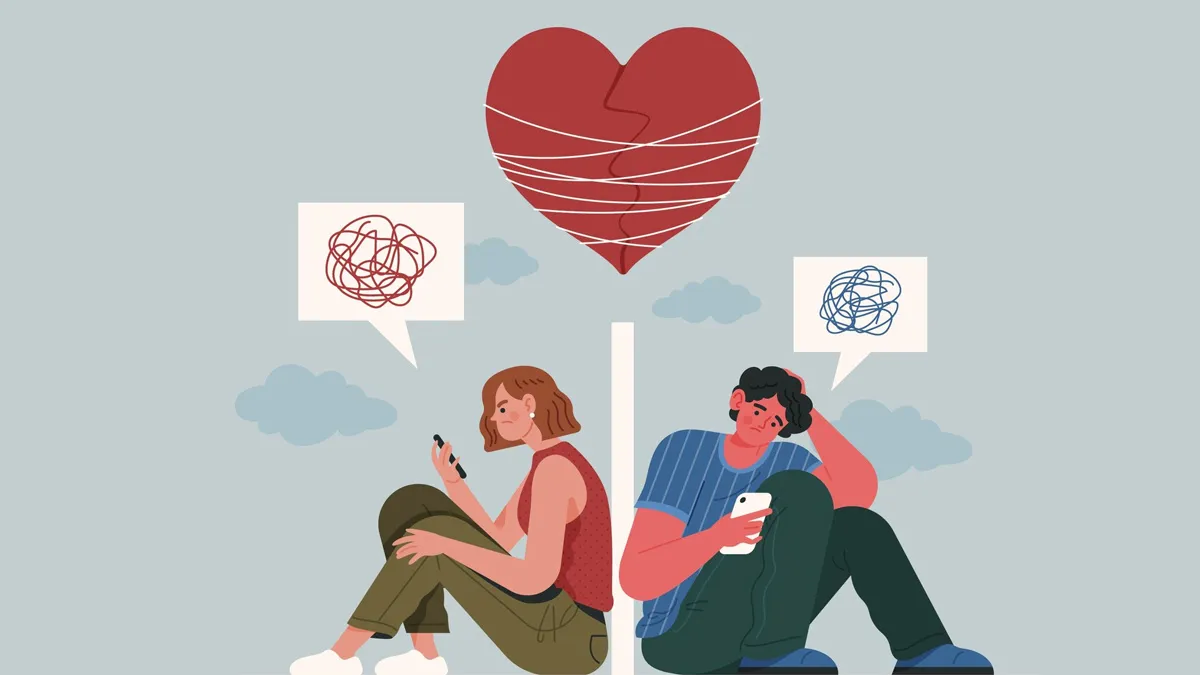
Picture this: You meet someone (maybe on a dating app), go out on a few dates, fall in love, start dating and then… there’s no happily ever after. Rather, you question yourself ‘are we serious or is this casual?’ or you wonder ‘are we in a situationship?’. Does this sound relatable? If yes, then you must be a Gen Z or a millennial, who is trying to find love in the age of right swipes, situationships and ghosting. Modern love looks a lot like this. And trust us when we say this – today’s youth feels dating is like an exhausting and emotionally draining task, or an endless dark tunnel with no light at the end. They are experiencing what we call 'dating burnout'. Don’t trust us? Hear it out for yourself.
The editorial team of OnlyMyHealth reached out to young and eligible singles, who shared their tales of dating burnout. To get an expert view on how the complex nature of modern dating impacts mental health, we interacted with Dhvani Satija, Psychiatrist, Fortis Hospital, Faridabad and Dr Divya Shree KR, Consultant – Psychiatry, Aster CMI Hospital, Bangalore.
‘Dating Feels Draining’: When Finding ‘The Right One’ Feels Exhausting
Modern dating is no more a walk in the park and butterflies in your stomach. It’s more like a roller coaster ride which gives you stomach churns – and it may or may not end up on a thrilling note. Millennials and Gen Zs find the entire process of finding ‘the right one’ exhausting and tiring.
“Modern dating often feels like running on a treadmill that keeps speeding up without warning. The emotional labour of putting yourself out there: sharing bits of your life, your humour, your vulnerabilities, only to be met with indifference or ghosting can be incredibly draining,” shares Saumya Rastogi, a 28-year-old Delhi-based journalist. She shares one recent dating instance which left her heartbroken.
 saumya quote
“I had planned to meet someone I’d connected with on an app. We picked a cozy café, I reached on time; and after several calls and 45 minutes of waiting, he simply didn’t show up. No message, no explanation. Moments like that chip away at your optimism. It’s not the rejection itself, it’s the casual cruelty of it, the sense that people have stopped treating each other like people,” says Rastogi.
Like Rastogi, Karan Cheema too feels dating takes a lot of work in today’s day and age. The 27-year-old Delhi-based Marketing Consultant says, “Dating makes me feel mentally exhausted, tired, and sometimes hopeless. This usually happens when I’m very active and going on dates regularly. The hopelessness usually hits when the date doesn’t go as expected. The internet has made things so fake and performative that this artificiality has now spilled into the dating world instead of staying limited to social media.”
 anshuman quote
Ananya (name changed) feels dating is no longer easy. For the 35-year-old Delhi-based Lawyer, it is the need to push oneself out of their comfort zone to connect and open up to someone, feels difficult. Not just this, adult responsibilities also pose a challenge. “Dating felt manageable till school and university; but now, post-30, work and responsibilities pile up endlessly.”
Also Read: Why People Get The 'Ick' In Relationships? Expert Shares The Science Behind It
Loves Me, Loves Me Not – How Inconsistency Feels Emotionally Taxing
“Most of the time it feels like you are stuck in a vicious cycle. You match with someone (on an app), you talk for a bit, but then you realise they don’t want the same thing and it all repeats, time and again!” says Anubha Shriwas, 22, Delhi-based Journalist.
For Anshuman Aryav, dating feels mentally draining because of the emotional inconsistency that comes with it. “Like one day someone seems genuinely interested, and the next day they ghost you. That sudden disconnect and loneliness make you question your own worth. Many times, I’ve felt hopeful after a great conversation or date, just to realise later that the other person wasn’t looking for the same thing and simply disappeared. Such disappointments and disconnects stay in my mind, leaving an impact until I meet someone else, get attached again, and end up repeating the same cycle,” shares the 24-year-old Delhi-based Media Professional.
 modern love part 1 inside 2
Tiyas Pal shares how dating has always been stressful and mentally exhausting for her. “What drains me out the most is when I take an initiative to start a conversation with someone, but at the end it doesn’t materialise to something concrete. I have encountered instances where people show interest for a day or two, but then suddenly disappear,” the 29-year-old Kolkata-based Digital Marketeer explains.
Trisha (name changed) feels hopeless when conversations don’t go anywhere, efforts aren’t reciprocated, or when people suddenly withdraw. “After a few such experiences, there is a sense of hopelessness — as if meaningful connection is harder to find than it should be,” says the 34-year-old Delhi-based Communication Manager.
 modern love part 1 inside 1
Is Modern Dating Damaging Our Mental Health?
Can the uncertainty, paired with extreme highs and lows, of modern dating impact one’s mental health? Our experts answer.
“From a psychiatric perspective, modern dating is not inherently bad – but the way it unfolds today can put a lot on emotional well-being. Many of my young patients describe dating as a ‘part-time job’ – filled with uncertainty, performance pressure, and emotional highs and lows. This constant vigilance-wondering such as whether the match is real, or whether they're being compared to dozens of others-keeps the nervous system on alert. Over time, this can contribute to anxiety, low self-esteem, and even depressive symptoms,” shares Dr Satija.
She further continues, “One of the most pressing issues is choice overload, whereby the multitude of options eventually engenders a fear of making the ‘wrong’ choice. In a similar line, chronic dissatisfaction may arise, coupled with self-doubt, and a feeling that relationships are disposable.”
 modern love part 1 inside 3
Dr Shree KR seconds this view. She believes that modern dating can affect some people’s mental health because it often relies on apps and social media, which can create the pressure to look perfect, respond quickly, and compete with others.
“It also leads to constant messaging, ghosting, or rejection. All of this can lead to stress, anxiety, low self-esteem, or feelings of loneliness; comparing yourself to idealised profiles can make you feel inadequate or insecure. The fast-paced nature of dating may reduce emotional connection and trust. Unclear intentions or casual relationships can create confusion and heartbreak. Spending too much time online, instead of building real-life connections, may worsen isolation. So, it is important to set boundaries, communicate openly, take breaks from apps, and focus on self-care to protect mental health in modern dating.”
Also Read: Can Codependency Affect Your Romantic Relationship?
The Final Word
The emotional inconsistency and the uncertain nature of modern dating often makes one feel drained or exhausted. This can cause ‘dating burnout’ in many, especially the GenZs and millennials. Experts believe that modern dating can affect people’s mental health because it often relies on apps and social media.
(This article is part of a series called ‘modern love and mental health’. Stay tuned for Part 2).
FAQ
How does online dating affect mental health?
Dating app use was linked to poorer self-esteem, and higher depression and anxiety.What are the disadvantages of online dating?
Some of the drawbacks of online dating include lack of real emotional connection, unwanted sexual messages, and the risk of people misrepresenting themselves.How relationships affect your mental health?
Constant conflict and negative interactions trigger significant stress, often leading to mental exhaustion.
All possible measures have been taken to ensure accuracy, reliability, timeliness and authenticity of the information; however Onlymyhealth.com does not take any liability for the same. Using any information provided by the website is solely at the viewers’ discretion. In case of any medical exigencies/ persistent health issues, we advise you to seek a qualified medical practitioner before putting to use any advice/tips given by our team or any third party in form of answers/comments on the above mentioned website.
How we keep this article up to date:
We work with experts and keep a close eye on the latest in health and wellness. Whenever there is a new research or helpful information, we update our articles with accurate and useful advice.
-
Current Version
Dec 03, 2025 16:50 IST
Modified By : Shruti Das Dec 03, 2025 16:50 IST
Modified By : Shruti DasDec 03, 2025 16:50 IST
Modified By : Shruti DasDec 03, 2025 16:50 IST
Published By : Shruti Das
Reviewed By : Dr Divya Shree K R