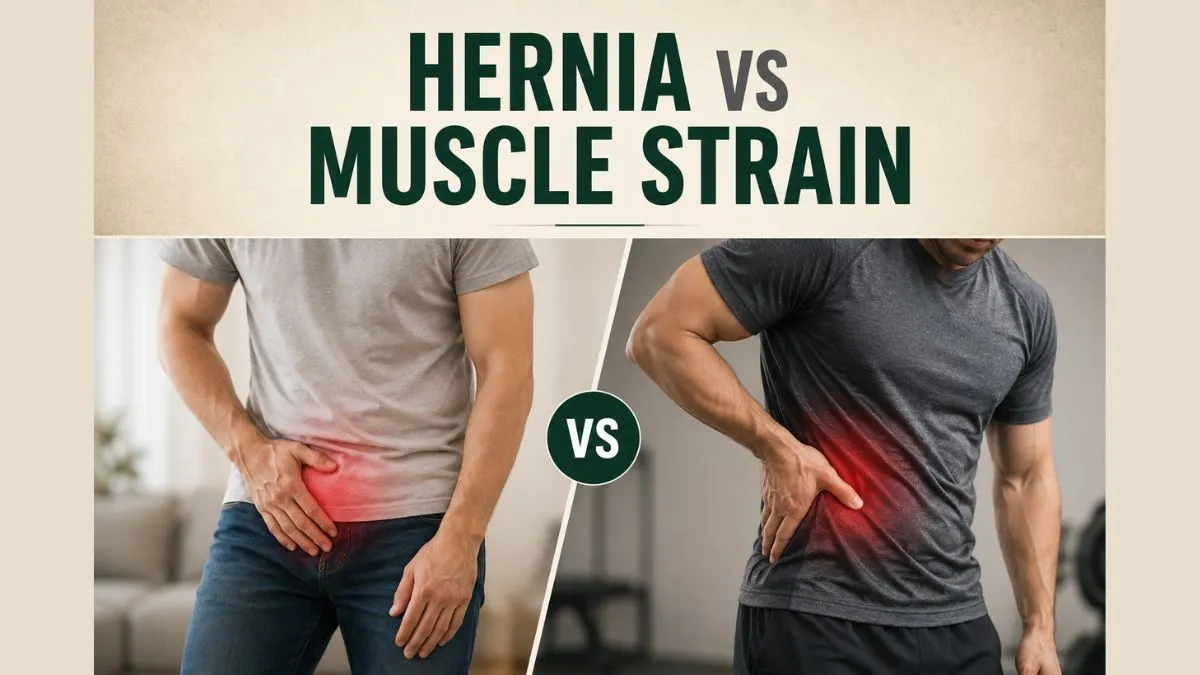
A hernia may appear as a lump or swelling that becomes more noticeable when standing, coughing, straining, or lifting something heavy. Some hernias cause little or no discomfort, while others can become painful and require urgent treatment.
Hernias are common and can affect people of all ages. Some are present from birth, while others develop later because of muscle weakness, ageing, previous surgery, or repeated pressure inside the abdomen.
Understanding the type of hernia, its symptoms, and when treatment is needed can help prevent complications.
What Is A Hernia?
The abdominal wall consists of layers of muscles and tissues that protect and support organs inside the abdomen. If an area becomes weak or develops a defect, tissue from inside the abdomen can push through it.
The protruding tissue may be part of the intestine, fatty tissue, or another abdominal structure.
A hernia often forms a visible or palpable bulge. It may become larger when you cough, sneeze, bend, lift, strain during a bowel movement, or stand for a long time. Some hernias become less noticeable or disappear when you lie down.
Although a hernia may not initially cause problems, it does not usually repair itself permanently. The weakness in the abdominal wall can remain and, in some cases, the hernia can gradually become larger.
What Causes A Hernia?
A hernia generally develops because of a combination of muscle weakness and increased pressure inside the abdomen.
According to a study published in the Journal of Contemporary Clinical Practice, the weakness may be present from birth or develop over time. Increased abdominal pressure can result from several factors, including:
- Heavy lifting
- Persistent coughing or sneezing
- Straining during bowel movements
- Chronic constipation
- Obesity
- Pregnancy
- Fluid accumulation in the abdomen
- Repeated strenuous physical activity
- Difficulty passing urine, particularly when associated with prostate enlargement
- Previous abdominal surgery
Age also plays a role because muscles and connective tissues can become weaker over time.
In some people, there may be a natural weak point in the abdominal wall that eventually allows a hernia to develop.
Types Of Hernia
There are several types of hernia. They are classified mainly according to where they occur.
Inguinal Hernia
An inguinal hernia occurs in the groin and is the most common type of hernia.
It develops when tissue pushes through a weak area in the abdominal wall near the inguinal canal. Men are more commonly affected, partly because of the anatomy of the male reproductive system.
An inguinal hernia may cause a bulge in the groin or extend towards the scrotum in men. Discomfort may increase when coughing, lifting, or standing for long periods.
Femoral Hernia
A femoral hernia occurs in the upper thigh or groin, near the femoral canal.
It is less common than an inguinal hernia and occurs more often in women, particularly older women.
A case report published in the Muller Journal of Medical Sciences and Research, femoral hernias have a relatively higher risk of becoming trapped or strangulated, so medical assessment is important even when symptoms initially seem mild.
Umbilical Hernia
An umbilical hernia develops around the belly button. It happens when tissue pushes through a weakness near the navel.
Umbilical hernias are common in babies and may also occur in adults. Pregnancy, obesity, and increased pressure inside the abdomen can contribute to adult umbilical hernias.
Some small umbilical hernias cause no symptoms, while larger ones may become uncomfortable.
Incisional Hernia
An incisional hernia develops at or near the site of a previous abdominal operation.
Surgery can weaken the abdominal wall, and the weakness may allow tissue to push through the scar later. Incisional hernias can develop months or even years after an operation.
The risk can be higher when wound healing has been affected or when there is repeated pressure on the abdominal wall.
Hiatus Hernia
According to a review published in the journal ‘Life’, a hiatus hernia is different from most other hernias because it occurs inside the chest rather than as a visible lump on the abdominal wall.
The upper part of the stomach moves through an opening in the diaphragm, the muscle separating the chest from the abdomen.
A hiatus hernia can contribute to acid reflux, heartburn, regurgitation, and discomfort after meals. However, some people have no symptoms.
Hernia In Children
Children can develop hernias because of weaknesses that are present from birth.
Inguinal and umbilical hernias are among the types commonly seen in children. An inguinal hernia in a child should be assessed because it can become trapped.
Umbilical hernias in young children may close naturally as the abdominal wall develops, but persistent or complicated hernias may require treatment.
What Are The Symptoms Of A Hernia?
The most obvious sign is often a lump or bulge.
You may notice that the swelling:
- Appears when standing
- Becomes more prominent when coughing or straining
- Increases with physical activity
- Becomes smaller when lying down
- Causes a feeling of pressure or heaviness
Pain is not always present. Some people experience a dull ache, burning sensation, or discomfort around the affected area.
Symptoms can vary depending on the type and size of the hernia.
A person with an inguinal hernia may notice groin discomfort, while someone with a hiatus hernia may mainly experience reflux-related symptoms.
When Does A Hernia Become An Emergency?
Most hernias are not immediately life-threatening, but complications can occur.
One important complication is incarceration. This happens when the protruding tissue becomes trapped and cannot be pushed back into its normal position.
A trapped hernia can progress to strangulation, where the blood supply to the trapped tissue is reduced or cut off. This is a medical emergency because the affected tissue can become damaged.
Warning signs include:
- Sudden or severe pain
- A hernia that becomes firm or very tender
- A lump that can no longer be pushed back
- Red, purple, or darkening skin over the swelling
- Nausea or vomiting
- Abdominal swelling
- Difficulty passing stool or gas
- Fever, particularly when accompanied by severe abdominal symptoms
These symptoms require urgent medical attention. A painful, irreducible hernia should not be repeatedly pushed or massaged in an attempt to treat it at home.
How Is A Hernia Diagnosed?
A doctor will usually begin with a medical history and physical examination.
You may be asked to stand, cough, or strain because these actions can make a hernia easier to identify.
Many external hernias can be diagnosed through examination alone. If the diagnosis is uncertain, or if the doctor needs more information about the size and contents of the hernia, imaging may be recommended.
An ultrasound can sometimes identify a hernia, while CT or MRI scans may be used in selected cases.
The type of imaging depends on the location of the suspected hernia and the symptoms.
Can A Hernia Be Treated Without Surgery?
Treatment of hernia without surgery depends on the type of hernia, its size, symptoms, and risk of complications.
Some small hernias that cause no symptoms may be monitored by a doctor. This approach is sometimes called watchful waiting.
However, monitoring does not repair the underlying weakness in the abdominal wall.
Lifestyle measures may help reduce pressure on the hernia or prevent symptoms from becoming worse, but they do not permanently close the opening.
For example, treating constipation can reduce repeated straining, while managing a chronic cough can reduce pressure on the abdominal wall.
If you are overweight, gradual weight management may also reduce pressure on the abdominal wall and improve general health.
A doctor may advise avoiding activities that consistently cause significant pain or discomfort.
Is Surgery The Only Permanent Treatment?
According to a study published in the Journal of Clinical Medicine, for many abdominal wall hernias, surgery is the main treatment that repairs the physical defect.
During hernia repair, the surgeon returns the protruding tissue to its appropriate position and closes or reinforces the weakened area.
A surgical mesh may be used to strengthen the abdominal wall, depending on the type and size of the hernia and the surgical approach.
Hernia repair can be performed through open surgery or minimally invasive techniques such as laparoscopic or robotic-assisted surgery, depending on the individual case and the surgeon's assessment.
The most suitable technique varies from person to person.
What Happens During Hernia Surgery?
The exact procedure depends on the type of hernia.
In open repair, the surgeon makes an incision over or near the hernia. The protruding tissue is moved back into position, and the weakened area is repaired.
In laparoscopic surgery, several smaller incisions are used. A camera and surgical instruments are inserted through these openings, allowing the surgeon to repair the hernia from inside the abdominal wall.
Some minimally invasive procedures use robotic assistance.
The choice depends on factors such as the hernia's location, previous operations, overall health, and the surgeon's experience.
What Is Recovery Like After Surgery?
Recovery varies according to the type of repair and the individual.
Some people can return home on the same day, while others may need a longer hospital stay depending on the complexity of the operation.
Mild pain, bruising, or swelling around the surgical site can occur during recovery.
Patients are usually advised to gradually return to normal activities. The timing for lifting heavy objects and returning to strenuous exercise should be discussed with the surgical team.
Following wound-care instructions is important to reduce the risk of infection.
Can A Hernia Come Back After Surgery?
Hernia repair is generally effective, but a hernia can recur.
The risk of hernia recurrence depends on factors including the type and size of the hernia, the surgical technique, tissue strength, smoking, obesity, wound complications, and conditions that repeatedly increase abdominal pressure.
Following medical advice during recovery can help support healing.
Smoking cessation and maintaining a healthy weight may also be beneficial for reducing surgical and long-term health risks.
Can Exercise Cause A Hernia?
Exercise does not automatically cause a hernia.
However, activities involving heavy lifting or intense straining can increase pressure inside the abdomen. If there is already a weak area in the abdominal wall, this pressure may contribute to a hernia becoming noticeable.
This does not mean that people with hernias should avoid all physical activity. The appropriate level of exercise depends on the individual and the type of hernia.
Anyone with a known hernia should discuss strenuous exercise and heavy lifting with their doctor, particularly if these activities cause pain or make the bulge larger.
Can You Prevent A Hernia?
Not every hernia can be prevented, particularly those related to weaknesses present from birth.
However, certain measures can reduce pressure on the abdominal wall and may lower risk.
These include maintaining a healthy body weight, avoiding smoking, treating persistent coughs, preventing constipation, and using safe lifting techniques.
When lifting an object, use your legs rather than relying entirely on your back and abdominal muscles. Avoid holding your breath and straining excessively.
A balanced diet containing enough fibre and adequate fluids can help prevent constipation.
Hernia During Pregnancy
Pregnancy increases pressure inside the abdomen and can contribute to the development or enlargement of some hernias.
An umbilical or groin hernia may become more noticeable as the pregnancy progresses.
Most hernias during pregnancy are managed according to their symptoms and severity. If a pregnant woman develops sudden severe pain, vomiting, or a painful lump that cannot be pushed back, urgent medical assessment is needed.
Elective hernia repair is often considered based on the individual situation and may be planned around pregnancy rather than performed routinely during pregnancy.
When To See a Doctor?
See a doctor if you notice a new lump or swelling in your abdomen, groin or around your belly button, particularly if it becomes more noticeable when you cough or strain.
You should also seek medical advice if an existing hernia is becoming larger, painful or increasingly difficult to push back.
Seek urgent medical attention if you develop sudden severe pain, vomiting, abdominal swelling, fever, skin discolouration over the hernia or a firm lump that cannot be pushed back.
Final Word
A hernia occurs when tissue pushes through a weak area in the muscle or connective tissue that normally holds it in place. It can occur in the groin, abdomen, belly button, upper thigh or, in the case of a hiatus hernia, through the diaphragm. Lifestyle measures can reduce strain and help manage some symptoms, but they do not permanently repair the underlying defect. The most important step is not to ignore a new or changing lump. Early medical assessment can establish the type of hernia and help determine whether monitoring or surgical repair is the appropriate approach.