



Turning 30 seems like a big milestone in someone’s life. People often believe that when one steps into their 30s, that person is entering a new and more evolved era of adulthood. But what if we tell you that you can still be considered an adolescent in your early 30s? At least that is what a new study claims. It states that our brain remains in its adolescent phase until our early thirties. If you want to know more about it, keep reading.
Table of Content:-
The editorial team of OnlyMyHealth reached out to Dr Niranjan Singh, Senior Consultant, Internal Medicine, CK Birla Hospitals, Jaipur, to get an expert view on this topic. Let’s take a look at what he has to say.
What Is The New Study On Adolescence All About?
Researchers at the University of Cambridge recently revealed the results from their findings on adolescence. It showed that the brain remains in its adolescent phase until our early thirties, and that’s when it reaches its ‘peak’. Around 4,000 people – aged up 90 – were a part of this study. They had scans that revealed the connections between their brain cells.
The results might help us understand why the risk of mental health disorders and dementia differs through each stage of life. According to the study, the brain is ever-changing in response to new knowledge and experience. And the research depicts how it is not one smooth pattern from birth to death; and instead, there are the five brain phases:
- Childhood - from birth to age nine
- Adolescence - from nine to 32
- Adulthood - from 32 to 66
- Early ageing - from 66 to 83
- Late ageing - from 83 onwards
Also Read: Recent Study Claims Your Brain Has 5 Different Eras In A Lifetime, Know Which You Are In?
Expert Decodes The New Adolescence Study
Does adolescence actually last until age 32? Here’s what our expert has to say.
Dr Singh explains, “Traditionally, adolescence was said to occur between 10–19 years. Later, experts expanded it to 10–24 years, because the brain—especially the frontal lobe—keeps developing till mid-20s. The new study states that it continues till 32, and it aligns with what neuroscience already shows.The brain’s prefrontal cortex (responsible for judgement, self-control, planning, emotional regulation) keeps maturing well into adulthood. Hormonal, social, and behavioral transitions now extend longer due to education, late marriages, and lifestyle patterns.”

He adds, “So, in the modern context, adolescence might be better seen as a developmental process, not a fixed age. Neurologically, maturity is a gradient, not an age cut-off. Brain development definitely continues till late 20s and even early 30s.”
What Is The Adolescent Brain?
Now that we know what the study is all about, let us get to know what the adolescent brain is. “It is the brain that is undergoing major structural, hormonal, and functional changes,” shares Dr Singh. He mentions some of its key characteristics:
- The limbic system (emotions, reward, risk-taking) develops early.
- The prefrontal cortex (judgement, inhibition, decision-making) matures later.
This mismatch leads to:
- Impulsiveness.
- Emotional mood swings.
- Risk-taking behavior.
- Social sensitivity.
- Intense learning capability.
“In short, the adolescent brain is highly plastic, emotional, and reward-driven, but still acquiring control, judgement, and long-term thinking,” explains the expert.
What Happens To The Brain At The Beginning Of Adolescence?
Dr Singh explains that at puberty, the brain undergoes three major transformations:
1. Hormonal Surge
- Sex hormones activate the limbic system → stronger emotions, attraction, reward-seeking.
2. Synaptic Pruning
- The brain removes weak/unused neural connections.
- ‘Use it or lose it’ principle → skills practiced become stronger.
3. Myelination Boost
- Nerve fibres get insulated with myelin, increasing speed of brain signals.
- Higher efficiency, better learning.
The myelination boost results in:
- Increased sensitivity to peer influence.
- Higher emotional reactivity.
- Stronger memory and learning capacity.
What Are The Stages Of Adolescent Brain Development?
The expert mentions that there are three clinically accepted phases of adolescence:
Early Adolescence (10–13 years)
- The limbic system grows rapidly → emotions, impulsivity.
- Peer approval becomes extremely important.
Middle Adolescence (14–17 years)
- Increased risk-taking.
- Greater independence.
- Development of abstract thinking.
- But judgement is still weak because the prefrontal cortex is immature.
Late Adolescence (18–25 years)
- Prefrontal cortex strengthens
- Better self-regulation
- More stable personality and long-term planning
Can The Brain Still Learn After 25?
One of the most commonly-asked questions is – do our brains still learn and develop after the age of 25? Our expert answers this for you.
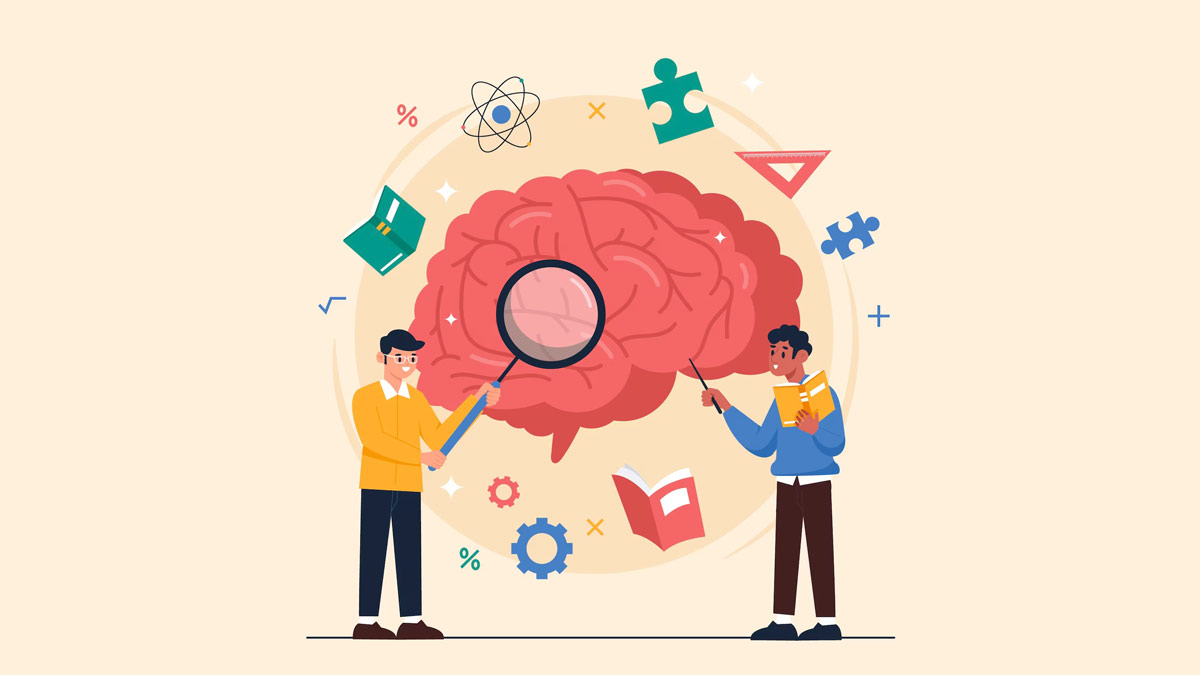
“YES — absolutely. Neuroplasticity (the brain’s ability to rewire and learn) continues throughout life. Some of the changes in the brain after 25 are plasticity slows, but doesn’t stop; learning requires more repetition, and emotional maturity improves learning efficiency. But adults can still learn languages, master new skills, form new habits, recover after brain injury – as the brain never stops evolving,” explains Dr Singh.
On this note, Dr Singh lists down the 7 major developmental stages of the brain:
1. Neurulation (Fetal Stage)
Neural tube forms → becomes brain & spinal cord.
2. Proliferation
Rapid multiplication of neurons.
3. Migration
Neurons travel to specific brain regions.
4. Differentiation
Neurons specialise (motor, sensory, cognitive).
5. Synaptogenesis
Formation of trillions of connections.
6. Synaptic Pruning
Elimination of weak connections—major process in adolescence.
7. Myelination
Insulation of neural pathways → faster, stronger brain signals.
Continues into adulthood (up to 30s).
Also Read: Is Brain Fever Real? Doctor Explains What Happens When a Fever Affects the Brain
The Final Word
A new study states that the brain remains in its adolescent phase until our early thirties. Our expert explains that, in the modern context, adolescence might be better seen as a developmental process, and not a fixed age. Neurologically, maturity is a gradient, not an age cut-off. Brain development definitely continues till late 20s and even early 30s.
Also watch this video
FAQ
Does adolescence end at 30?
The childhood period of development was found to occur between birth until the age of nine, when it transitions to the adolescent phase – an era that lasts up to the age of 32, on average.What stage of life are your 30s?
It is believed that adulthood starts at 30.What is the last age of adolescence?
Adolescence is generally considered to end between the ages of 18 and 21, but the exact timeline can vary for individuals.
How we keep this article up to date:
We work with experts and keep a close eye on the latest in health and wellness. Whenever there is a new research or helpful information, we update our articles with accurate and useful advice.
Current Version
Dec 25, 2025 21:17 IST
Published By : Shruti Das