


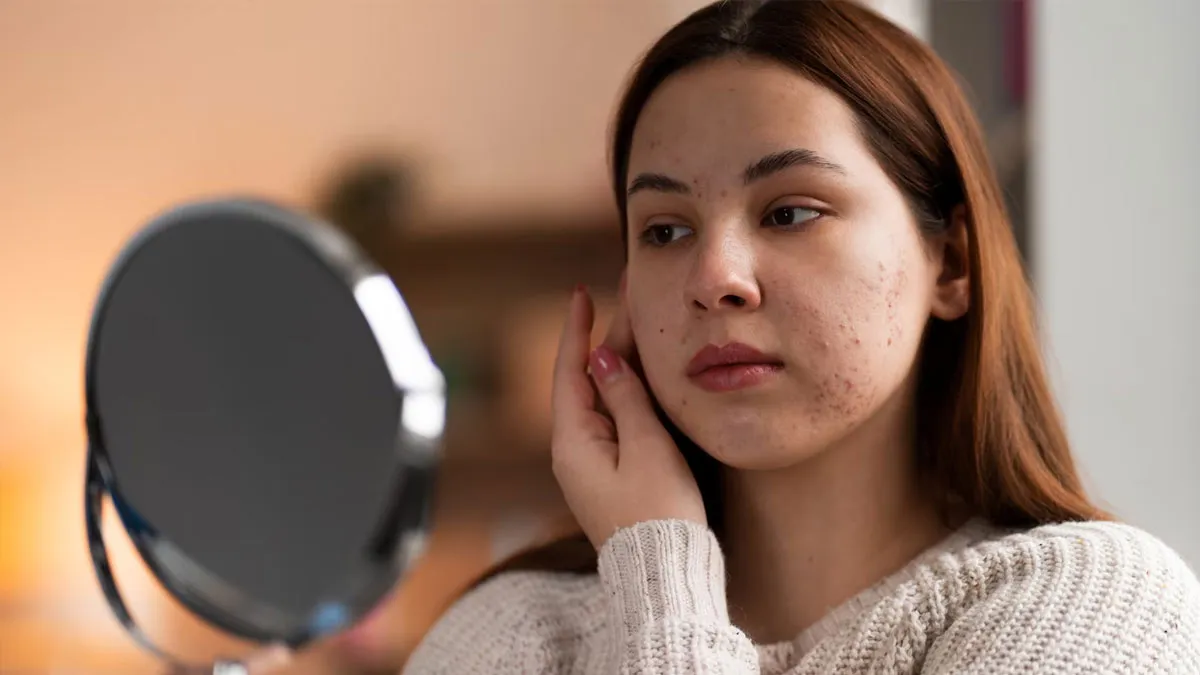
Adulting is not a bed of roses. It comes with its own set of challenges – from navigating health, life to career. One such adult challenge includes adult acne. They appear post-adolescence, after the age of 25. Some of the key factors that contribute to acne are excess oil production, clogged pores, bacteria, and inflammation. They are said to be the reason behind both childhood and adult acne. But can stress cause adult acne? Today, we will answer this for you.
Table of Content:-
To get a better understanding of this, the editorial team of OnlyMyHealth reached out to Dr Ridhima Arora, MBBS, MD (Dermatology & VD), Malik Radix Healthcare Pvt Ltd. Read ahead.
What Is Adult Acne?
Before we take a deep dive into the story, let us try and understand what adult acne is.
“Adult acne appears after the age of 25, either persisting from teenage years or starting newly in adulthood. Clinically, we see it more commonly in women, especially around the lower face, jawline and chin. Unlike teenage acne which responds faster, adult acne tends to be chronic, inflammatory and influenced heavily by internal triggers like hormones, sleep, metabolism and stress,” explains Dr Arora.
She adds, “We also see a higher association of adult acne with conditions like PCOS, thyroid imbalance and low-grade chronic inflammation linked to lifestyle.”
Can Stress Cause Adult Acne?
Now, it’s time to address the question you have been waiting for – can stress trigger adult acne? “Indeed, stress can do so and it is not just a matter of the mind. The connecting biochemical pathway is very evident. Upon stress, the brain sends a signal to activate the hypothalamic–pituitary–adrenal (HPA) axis," shares the expert.
Dr Arora continues further, “Once this happens, cortisol levels rise; and, sometimes, androgens get elevated as well. These hormones act as messengers to the sebaceous glands to ramp up oil production. More oil on the skin, together with a compromised skin barrier and inflammation, is a perfect milieu for acne bacteria proliferation.”
She mentions that stress is also associated with wound healing delay, and it raises inflammatory cytokines and affects sleep as well as skin recovery. “Hence, stress might not be the cause of acne in every individual, but a person with a genetic background of acne, it can make his/her occasional pimples become persistently adult acne,” shares Dr Arora.
What Are The Other Causes Of Adult Acne?
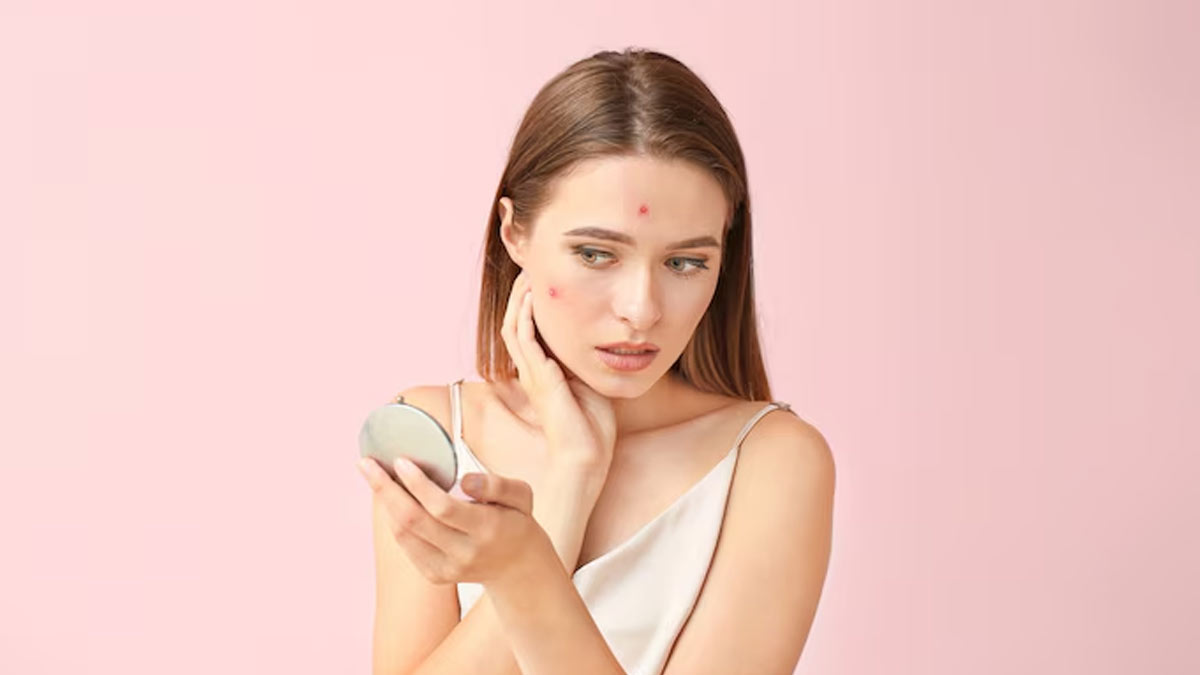
Adult acne hardly ever stems from a single cause. Our expert explains why. Dr Arora shares that in most cases, it is a combination of:
- Hormonal fluctuations: PCOS, menstrual cycles, stopping/starting oral contraceptives or pregnancy-related changes.
- Genetics: If one or both parents had adult acne, the probability is higher.
- Barrier dysfunction: Over-exfoliation, harsh cleansers or frequent product switching that weakens skin’s natural defence and triggers inflammatory acne.
- Lifestyle factors: High-sugar diets, dairy in some individuals, irregular sleep, smoking and sedentary routines.
- External triggers: Heavy makeup, oily hair products, tight helmets, mask friction and humidity.
- Underlying conditions: Gut health issues, insulin resistance and chronic inflammation that can also affect acne severity.
Tips To Treat Adult Acne
Treatment should be targeted and personalised. Dr Arora explains that a typical medical approach includes:
Topicals:
- Retinoids: Adapalene or tretinoin to prevent clogged pores and improve cell turnover.
- Azelaic acid: Helps with inflammation and pigmentation.
- Benzoyl Peroxide: Controls acne-causing bacteria.
- Salicylic acid: Oil-soluble exfoliant that clears pores.
- Barrier Repair: Adult skin tolerates actives better when the barrier is healthy, so a gentle non-comedogenic moisturiser is essential, not optional.
Systemic treatment (case-dependent):
- Oral retinoids for severe acne.
- Anti-androgen medications like spironolactone or hormonal therapy for hormonally driven acne.
- Short courses of antibiotics when inflammation is high, always paired with microbiome-friendly care.
- Adjunct Therapies
- Chemical peels, LED therapy and clinically-backed lasers can complement medical treatment.
- Most importantly patience matters. Adult acne usually shows meaningful change after 8–12 weeks of consistent treatment.

Tips To Reduce And Manage Stress
Stress management should run parallel to acne treatment. Some evidence-backed approaches include:
- Consistent physical activities, particularly weight training and yoga.
- Working on sleep patterns and stopping digital usage at least one hour before sleep.
- Meditation or simple breathing exercises (5-10 minutes daily) as a part of mindfulness practice.
- Limiting screen usage and social media.
- If you are taking therapy or doing journaling, both can be helpful.
- “Even if it is only a small change, if it is repeated consistently, it can help to regulate hormones, reduce inflammation and promote the skin to heal,” concludes Dr Arora.
Also Read: Worrying Why You Acne Wont Go Away? Expert Shares 6 Reasons
The Final Word
Adult acne appears after the age of 25, either persisting from teenage years or starting newly in adulthood. Unlike teenage acne which responds faster, adult acne tends to be chronic, inflammatory and influenced heavily by internal triggers like hormones, sleep, metabolism and stress. Treatment for adult acne should be targeted and personalised.
Also watch this video
FAQ
How do you get rid of adult acne?
To get rid of adult acne, start with a good skincare routine and maintain a balanced diet.How to stop adult hormonal acne?
There are multiple ways to stop adult acne such as following a good skincare routine, maintaining a balanced diet, hydration etc.What deficiency causes adult acne?
Acne in adults are often caused also by zinc deficiency.
How we keep this article up to date:
We work with experts and keep a close eye on the latest in health and wellness. Whenever there is a new research or helpful information, we update our articles with accurate and useful advice.
Current Version
Jan 04, 2026 12:45 IST
Published By : Shruti Das