

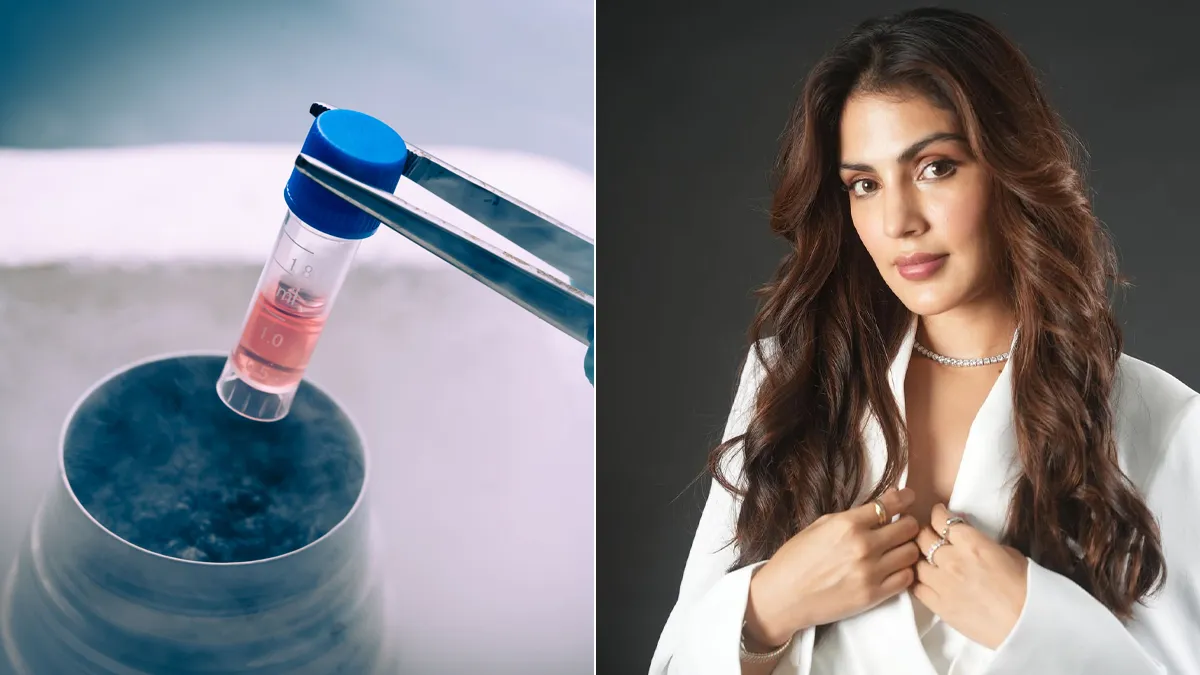
The biological clock feels like a ticking time bomb for many women. This is because it puts a lot of pressure on them. Here the role of egg freezing plays an important role. It opens a window of possibilities for women who want to plan their families in a healthy timeline. Recently, Rhea Chakraborty shared her plans to freeze her eggs. Let’s take a look at what the actress-entrepreneur had to say about it.
Table of Content:-
When approached with clarity, realistic expectations and careful planning, egg freezing can provide a meaningful option for fertility preservation. But to truly use it wisely, one must follow certain do’s (and avoid certain don’ts), both before and after the procedure. This article explains it all for you. To get an expert view on this, the editorial team of Only My Health reached out to Dr Navina Singh, Fertility Specialist at Birla Fertility & IVF, Mumbai. Keep reading.
‘Thinking About Doing It’: Rhea Chakraborty On Egg Freezing
Rhea Chakraborty has recently spoken about a personal choice. The actress, in the latest episode of her podcast Chapter 2, shared that she recently visited a gynaecologist. She added that she consulted with the doctor to explore the possibility of freezing her eggs.
She said, “I am 33 and I recently visited a gynaecologist for egg freezing. I am thinking about doing it. It is such a weird place to be. Your body clock is telling you that you need to have kids, but your mind is telling you, you already have a kid - your brand, your business and you have to nurture that baby."
Rhea Chakraborty was speaking to her guest Huma Qureshi in the episode.
Egg Freezing: Why Timing And Egg Count Matter
If you are contemplating egg freezing, the right time and quality of your egg is crucial. “Egg quality and quantity decline with age. Evidence shows that the number of mature oocytes retrieved falls markedly: at the median (50th percentile), women aged 30, 35 and 40 years yielded approximately 15, 11 and 6 mature eggs respectively for cryopreservation,” shares Dr Singh.
She adds, “Reproductive experts also believe that freezing 14–20 mature oocytes is a reasonable target. If the goal is future live birth for those freezing under 38 years and preserving ≥ 20 mature eggs, outcomes are quite encouraging, studies indicate up to a 70% chance of at least one live birth per patient. This data reinstates that the sooner (and the more eggs collected), the better the odds; so early planning is smart.”
Also Read: Is Egg Freezing a Choice or a Luxury in India That Only the Privileged Can Afford?
Egg Freezing: Pre-procedure Do’s And Dont’s
On this note, Dr Singh shares some of the do’s and dont’s to follow before egg freezing procedure:
- Do begin with a detailed fertility assessment including ovarian reserve tests (like AMH, antral follicle count) – to understand exactly where fertility health stands.
- Do share your full medical history with your doctor. PCOS, thyroid, endometriosis, past surgeries – everything matters. The more your doctor knows, the better they can personalise your plan.
- Do consume balanced nutrition. Load up on protein, healthy fats, antioxidants, and drink plenty of water. Your hormones and eggs will thank you.
- Do moderate exercising. Stick to gentle workouts like yoga, walking, and light cardio. Skip the intense training that messes with your hormones.
- Don’t smoke, vape, or consume alcohol too much. All three hurt your egg quality and how your ovaries respond.
- Don’t take random supplements. Ensure you’re only taking supplements based on deficiencies that show up in a medical test and confer about the same with your doctor.
- Do choose a clinic that has advanced technology and maintains transparency in terms of communication regarding the procedures and costing.
- Don’t expect that one cycle will suffice. Depending on response, more than one stimulation cycle may be needed to reach a target egg count.
- Don’t stress about your numbers. Egg count depends on age, genetics, and your body. It’s not a scorecard for your fertility.
Egg Freezing: Post-procedure Do’s And Don’ts
Dr Singh also shares some of the do’s and dont’s to follow post freezing your eggs:
- Give your body some rest if you need it – the retrieval is quick under light anaesthesia but in case your hormones feel heavier, give yourself physical and mental rest.
- Drink water and move a little. Walking around the house helps with bloating and gets your ovaries back to normal.
- Pay attention to your body. If you get bad pain, vomiting, or suddenly gain weight, call your clinic right away.
- Talk with your doctor about next steps. Review how many eggs they retrieved and froze. See if you need another cycle.
- Don’t postpone family planning indefinitely purely because eggs are frozen – future pregnancy and how healthy it will depend on the health of your body and uterine environment.
- Don’t push yourself at the gym for a couple of weeks – your ovaries are still swollen. Hard exercise can twist them, and that’s dangerous.
- Don’t wait to figure out egg storage – sort out your storage plans early so you’re not scrambling later.
Also Read: Top Questions Women Should Ask a Fertility Specialist Before Freezing Their Eggs
The Final Word
Egg freezing offers real possibilities, but it must be treated as an option and a stronger starting point for later, not a guarantee. Success depends on informed decision-making, early timing, realistic planning, and long-term perspective. For those considering freezing, a candid discussion with one’s fertility specialist about risks, likely yields, realistic success rates and follow-up is essential.
FAQ
What is the best age to freeze your eggs?
The ideal age to freeze eggs is between 25 and 35.What is the purpose of egg freezing?
People freeze their eggs primarily to delay childbearing for career, relationship, or personal goals.Will you get periods if you freeze your eggs?
Yes, you will still get your period after freezing your eggs.
How we keep this article up to date:
We work with experts and keep a close eye on the latest in health and wellness. Whenever there is a new research or helpful information, we update our articles with accurate and useful advice.
Current Version
Dec 09, 2025 14:08 IST
Published By : Shruti Das