

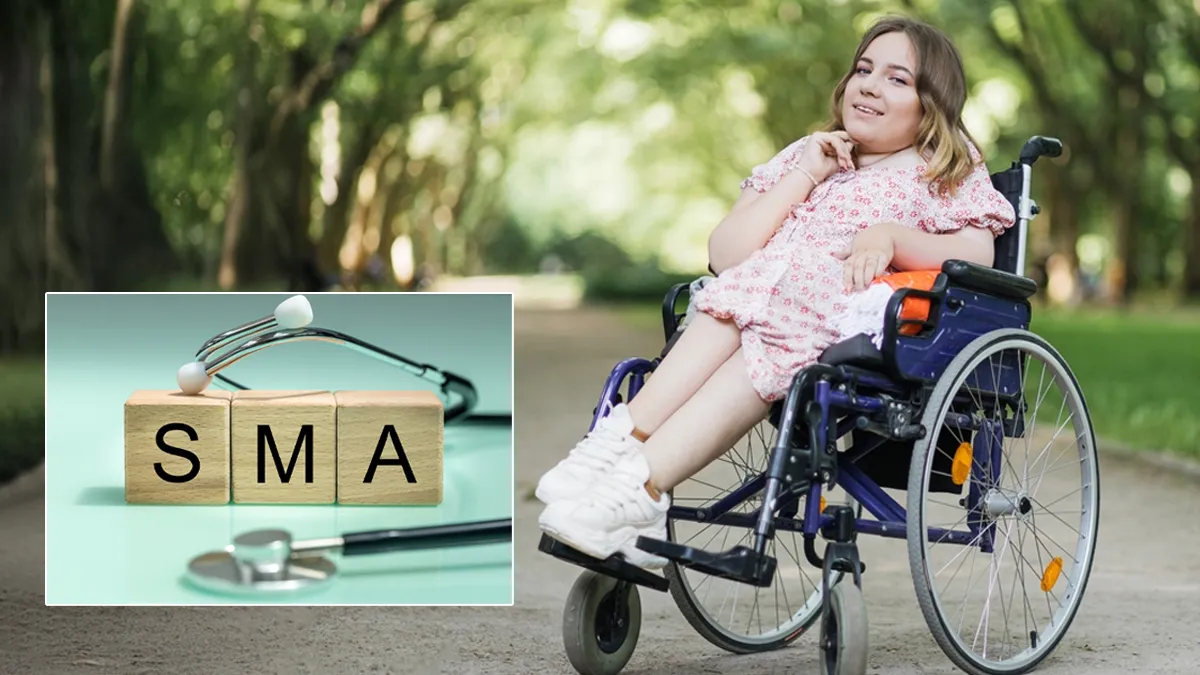
Spinal Muscular Atrophy (SMA) remains a devastating neuromuscular disease globally, serving as a leading genetic cause of infant deaths worldwide. In India, one in 7744 babies are affected by SMA, which makes it the second most common genetic cause of infant mortality in the country. Modern advancements in medical science have paved the way with groundbreaking therapies, but there are a lot of barriers that need to be overcome, one of which is the lack of newborn screening for SMA. Due to this, we miss the crucial window for early detection of SMA, leading to infants losing their lives to this fatal genetic condition.
Table of Content:-
Professor Philip J. Young, Director of Educational Analytics, School of Life Sciences, University of Warwick, is currently doing extensive data-driven research on SMA. In an exclusive conversation with Onlymyhealth, he shared his insights on the role of newborn screening and prompt awareness to minimise the infant mortality rate due to spinal muscular atrophy.
What Is Spinal Muscular Atrophy?
To begin with, let’s understand what is spinal muscular atrophy or SMA. This is a genetic disorder affecting motor neurons, the nerve cells responsible for controlling muscles. These neurons cannot regenerate. Once they die, it leads to progressive muscle weakness.
The life expectancy of a child with SMA is dreadful, especially for those with type 0 and type 1 SMA, as they fail to live past age 2.
That’s why early diagnosis is crucial; treatments can protect the neurons that remain, but can’t recover the ones already lost.
Why is early detection of SMA so critical?
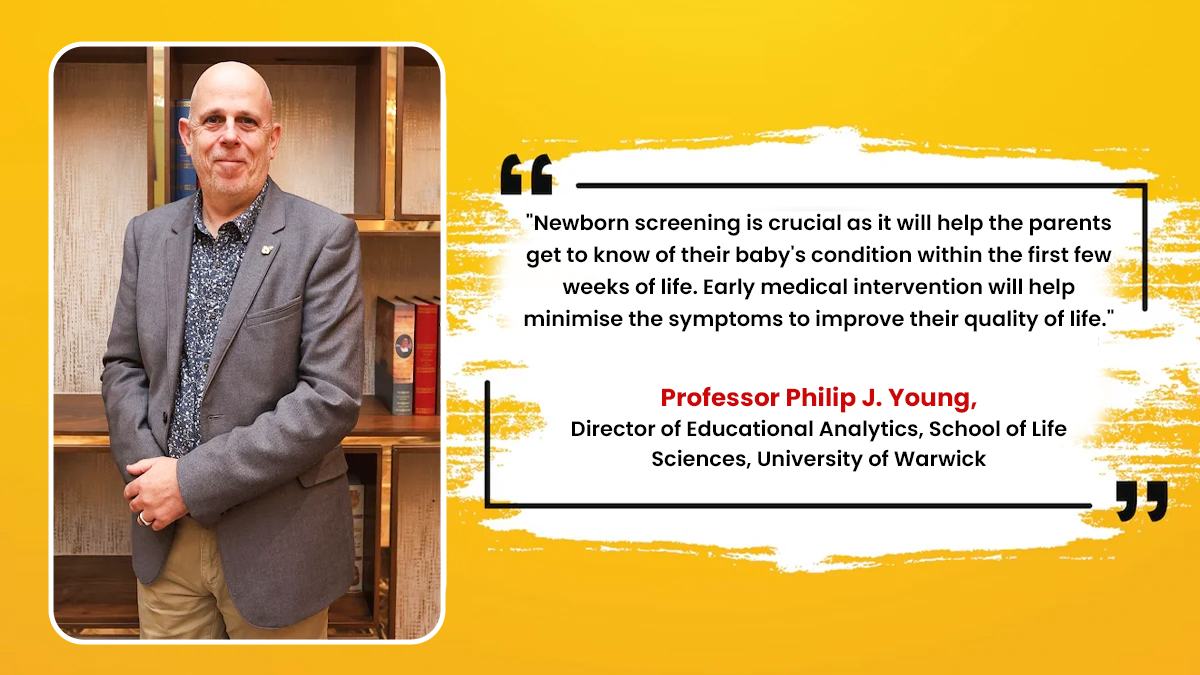
Prof Young answers, "Mouse models in the preclinical work show that if you treat earlier, it has the best impact."
Further explaining, Prof Young says, "We don't have newborn screening for SMA in India and the UK. What happens is basically that the children are born with no symptoms whatsoever. Even though the carrier frequency is around 1 in 40, 1 in 50, in both India and the UK, the families tend to have no familial history with this disease. So the carriers do not know they're carriers because there aren't any carrier screens. There is a symptomatic version called type 0. That's really rare. So the majority of children will get to the age of about four or five months of age, and then all of a sudden lose their muscle tone because their neurons have died. And that's when they're diagnosed with SMA."
ALSO READ- Spinal Muscular Atrophy: Symptoms, Challenges And Management
We aim to shift the system toward newborn screening so that children can be diagnosed within the first few weeks of life.
What difference does early screening make?
Newborn screening can make a life-changing difference. Babies diagnosed before symptoms and treated early:
- Maintain better muscle strength.
- Achieve milestones like walking and sitting.
- Have a significantly improved quality of life.
- Can avoid severe disability altogether
In short, early detection literally decides how many neurons are saved and that determines the child’s future.
What treatments are available today for SMA and how effective are they?
There is a symptomatic version called type 0. That's really rare. So the majority of children will get to the age of about four or five months of age, and then all of a sudden lose their muscle tone because their neurons have died. And that's when they're diagnosed with SMA and treated with really expensive drugs. So it could be Zolgenspil, which is the gene therapy, which is well over 2.1 million pounds. Or it could be Spinraza and Risdiplam, but all three of those are really expensive.
Also Read: Experts Explain Preventive Strategies For Spinal Muscular Atrophy
“The problem is that if you give them after you've diagnosed the disease, when the clinical symptoms have emerged, the patients or children have already lost some of their motor neurons. This means all the drug will do is stabilise the surviving motor neurons. Which means you can prevent the children from dying. But the initial pathology that arises through the loss of the motor neurons that cause the symptoms is always going to be there. Which means you'll have residual disability. Which means a child with type-1 SMA, if untreated, would die within two years,” shares Prof Young
However, therapies like Zolgensma, Spinraza and Risdiplam have revolutionised SMA:
- Children who previously would not survive beyond age 2 are now going to school and living active lives.
- Early-treated children often show minimal signs of the condition.
- Outcomes are highly promising, though long-term studies will continue.
The major challenge is cost. These therapies are among the most expensive in the world.
As far as research on SMA is concerned, Professor Young shares that the University of Warwick is currently focusing on newborn screening advocacy, improving early diagnosis techniques, and working with families and healthcare systems to increase acceptance and accessibility.
“We are determined to make SMA screening a routine part of newborn care,” says Prof Young.
Potential Challenges Of Newborn Screening For SMA In India
The bigger challenges are:
- A large population requires a high nationwide screening cost
- Very expensive treatment access
- Limited awareness at primary healthcare levels
- Education, policy push, and supportive healthcare infrastructure are essential for improvement.
Final Word
Prof Young concludes by saying, SMA is no longer a hopeless condition. Early detection saves neurons. Saved neurons save abilities. And saved abilities save lives. If screening and treatment reach every child in time, SMA can shift from a fatal disease to a manageable condition worldwide, including India.
Also watch this video
FAQ
What is the cause of spinal muscular atrophy?
This is a genetic disorder caused due to SMN1 gene mutation, leading to shortage of SMN protein which is crucial for motor neuron health.Can people with SMA ever walk?
This depends on the type of SMA. This disease becomes severe over time, affecting the mobility of the patient.How long do SMA patients live?
The life expectancy of SMA patients depends on the type of SMA.
Read Next
Silent Sinus Syndrome: Expert Shares When Constant Sniffles Point to Hidden Pressure Damage
How we keep this article up to date:
We work with experts and keep a close eye on the latest in health and wellness. Whenever there is a new research or helpful information, we update our articles with accurate and useful advice.
Current Version
Dec 09, 2025 15:03 IST
Modified By : Chanchal SengarDec 09, 2025 15:03 IST
Published By : Chanchal Sengar